
Abundance New York 2026 Congressional Candidate Questionnaire
Vichal Kumar
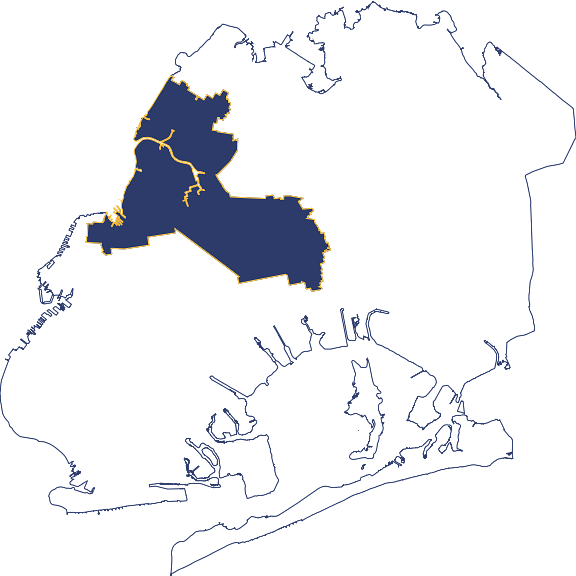
Congressional District NY-7
Background
Please briefly describe your background and why you are running for this office.
I am a public defender and civil rights attorney. For more than 20 years I have represented working families across the city, defending them from deportations and evictions and fighting systems that too often failed them. But I didn't just fight those systems. I built new ones. Holistic defense programs in the Bronx and Harlem that connected families to housing, healthcare, employment, and legal services all under one roof, then scaled that model to communities across the country. As the son of working-class immigrants who ran a convenience store, I know what it's like to grow up with no safety net. I am running because working families and small business owners deserve someone in Congress who has spent his career building solutions, not someone who rose through politics. From the fight, not from politics.
How are you differentiated from your opponent(s)? What does your path to victory look like in your district?
-Three politicians, one public defender is the choice. Each of my opponents comes from elected office with a party machine or organization behind them. None of them has built an institution from scratch. I built holistic defense programs in the Bronx and Harlem that connected families to housing, healthcare, and employment, then scaled that model nationwide. The difference is not just experience. It is the difference between voting on policy and building the infrastructure that delivers it.
On viability: an Emerson College/PIX11/The Hill poll found 43 percent of likely primary voters were still undecided. That is more than the support for any single candidate. I am first on the ballot, funded entirely by people with no super PAC coordination, no AIPAC money, and no real estate developer support. We win by consolidating that undecided majority in the final stretch.
Democracy & Delivery
NEPA Reform: Congress should reform the National Environmental Policy Act (NEPA) to reduce the time and scope of federal environmental review for housing, transit, renewable energy, and resilience projects. NEPA delays affect federally funded projects in New York, adding years and significant costs to critical infrastructure.
Qualified Agree, I support streamlining federal environmental review so the housing, transit, renewable energy, and resilience projects we need get built on a reasonable timeline. But I do not support a blanket rollback. The same review that delays a bus lane may also allow for a community to fight a highway being rammed through it. II would create categorical exclusions for proven project types like bus lanes, bike infrastructure, supportive housing, and solar installations so they move fast. For larger projects, I would set clear timelines and reduce duplicative review while preserving the right of communities to have real say over what gets built where they live.
Capital Project Procurement Reform: Congress should give federal agencies and their state and local grantees more procurement flexibility—such as expanded other transaction authority and performance-based contracting—to speed up delivery of federally funded capital projects. This should include examining Buy America requirements and federal cost-sharing rules that inflate project costs.
I support cutting the delays and cost overruns that make federally funded projects take twice as long and cost twice as much. I would pair that with firm protections for union labor, prevailing wage, and domestic supply chains. Faster and cheaper delivery cannot come at the expense of the workers who build these projects. I would reform procurement to deliver more, not to weaken Buy America or labor standards.
Feel free to share any additional context on your answers for this section below.
Housing & Homelessness
Expanding Housing: Addressing the housing affordability crisis requires increasing production of all kinds of housing, including market-rate units. Congress should increase federal support for housing production through funding and regulatory changes, including by tying federal transportation, infrastructure, and community development funding to pro-supply local policies such as zoning and permitting reform.
Agree
Homelessness: Congress should increase federal funding for Housing First approaches, including permanent supportive housing, as the primary strategy for addressing homelessness.
Agree
Transit-Oriented Development: Congress should incentivize transit-oriented development by conditioning federal transit funding on local zoning changes that allow more housing near transit stations.
Agree
Build Code Reform: Congress should support research, funding, financing, and model codes that encourage cheaper construction methods (e.g., modular construction, mass timber) while maintaining safety.
Agree
Repeal the Faircloth Amendment: Congress should repeal the Faircloth Amendment, which prohibits the use of federal funds to build new public housing units beyond the number that existed in 1999, to allow for the construction of new public housing.
Agree
Feel free to share any additional context on your answers for this section below.
I agree that we need to build far more housing of every kind and that federal dollars should reward places that build near transit and penalize places that block it. I would pair that with a massive expansion of Section 8 so the voucher program meets demand instead of leaving working families on years-long waitlists, strong tenant protections, and new public and social housing. Affordability must be tied to what local residents actually earn, not a metro-wide AMI that makes "affordable" housing unaffordable for the people it's supposed to serve. We build more, and we make sure the people who live in this district can actually afford what gets built.
Housing First works because stability is the precondition for everything else, and two decades of public defense have shown me what happens to people when they lose it. I support expanding federal funding for permanent supportive housing as the foundation of how we end homelessness, paired with the services that keep people housed.
Tying federal housing and transit dollars to land-use reform that allows more homes near transit is one of the most direct levers Congress has. Right now we too often reward the places that block housing. I would flip that and reward the places that build it near transit.
Modular construction, mass timber, and modern model codes can bring down the cost of building without compromising safety, and federal research and financing should support them. I would keep strong safety standards and union labor protections as part of any push for cheaper methods.
I strongly agree on repealing the Faircloth Amendment, and this is already part of my platform. The Faircloth Amendment freezes public housing at 1999 levels and makes it effectively illegal to build the new public housing this country needs. I would fight to repeal it so we can build public housing again at scale.
Public Transit & Public Space
Transit Cost Containment: Congress should act to reduce the cost of federally funded transit projects, including by reforming FTA New Starts and Capital Investment Grant requirements, streamlining federal review, and encouraging cost-containment practices as a condition of federal funding.
Agree
Bus Transit Investment: Congress should leverage its funding for bus transit to encourage the creation of busways and bus rapid transit where appropriate to increase the speed of buses and the efficiency of federal investments, including through programs like the FTA's Capital Investment Grants and Bus and Bus Facilities program.
Agree
Automated Camera Enforcement: Congress should remove or oppose federal restrictions that limit state and local use of automated traffic enforcement—such as red light cameras, speed cameras, and bike lane cameras—and should allow federal highway safety funds to support automated enforcement expansion.
Agree
Parking: New York City should charge more for parking and reduce or eliminate free street parking.
Agree
Feel free to share any additional context on your answers for this section below.
Transit projects in this country take too long and cost too much, and reforming FTA New Starts and Capital Investment Grant requirements to contain costs means we can build more transit with the same dollars. I would pair cost containment with the project labor agreements and prevailing wage that make these good union jobs.
Bus rapid transit and busways are the fastest, most affordable way to give people better service, and I support federal investment in them, including the Ridgewood Busway and BRT on corridors like Flushing, Knickerbocker, Metropolitan, and Myrtle. The biggest barrier to better buses is operating cost, and I would fight to lift the Reagan-era restrictions on federal operating support so we can fund free, frequent buses at scale.
Speed is the single most reliable predictor of whether a crash kills someone, and the federal government should stop standing in the way of cities that want to use automated enforcement to make lower speed limits real. New York City has the authority to go to 20 mph on most streets and should use it, but lower speed limits only work if they're enforced, which is why removing federal restrictions on automated enforcement matters. I support federal funding for that enforcement. I would also build in privacy and due-process guardrails and make sure these systems serve safety, not regressive fines, so they do not fall hardest on working families.
Free on-street parking is one of the largest unpriced public subsidies, and in New York, that public space could also be housing, a bus lane, a bike lane, or third spaces where neighbors actually gather. Public space doesn't belong to private vehicles by default. I would pair pricing street parking with real transit alternatives so working people are not left stranded.
Renewable Energy & Resilience
Solar Energy: New York State should preempt local regulations that effectively ban solar projects by establishing a ceiling on restrictions and should streamline solar permitting by adopting automated systems in order to enable more solar energy.
Agree
Nuclear Energy: Congress should support expanding U.S. nuclear energy capacity by funding new reactor designs, streamlining NRC licensing, and extending the operating licenses of existing plants in order to hit the goal of 100% zero-emission electricity generation by 2040.
My priority is the fastest, cleanest, most affordable path to zero-emission power, which means renewables, transmission, storage, and efficiency first. I support keeping existing zero-emission plants running safely and am open to advanced reactor research, but I would not center our climate strategy on new nuclear until the safety, cost, and timeline questions are answered.
Geothermal Energy: Congress should support the expansion of geothermal energy development through federal research funding, streamlined permitting, and incentives for deployment, including in dense urban areas like New York.
Agree
Transmission Co-Location: Congress should support legislation that prioritizes existing highway, railroad, and utility rights-of-way for the siting of new electricity transmission lines, reducing permitting delays and landowner conflicts while accelerating the buildout of transmission capacity needed to deliver clean energy.
Agree
Climate Resilience Investments: Congress should increase federal investment in climate resilience infrastructure, including coastal defenses, stormwater management, and cooling infrastructure, with priority given to socially vulnerable communities.
Agree
Buyout Reform: Congress should reform federal disaster buyout programs—including those administered through FEMA and HUD—to accelerate the relocation of families out of high-risk flood zones, with streamlined environmental review, standing funding, and expanded eligibility for renters.
Agree
Feel free to share any additional context on your answers for this section below.
We cannot let local bans block the clean energy we need, and streamlined, automated permitting gets solar onto more roofs faster. I would pair deployment with union labor and domestic manufacturing wherever possible.
Geothermal, including in dense cities like New York, is a promising clean-energy source that deserves federal research funding, streamlined permitting, and deployment incentives.
Using existing highway, rail, and utility rights-of-way to site new transmission is a commonsense way to cut delays and conflicts and get clean power where it is needed. I would build it with union labor and domestic supply chains.
NY-7 has waterfront and flood-vulnerable neighborhoods, and federal investment in coastal defenses, stormwater management, and cooling infrastructure is a matter of survival. We have seen this already in the devestation and death tool caused by Hurricane Ida. Priority should go to the socially vulnerable communities that climate change hits first and hardest.
Families in high-risk flood zones should be able to relocate with dignity, and that means faster FEMA and HUD buyouts, standing funding, and eligibility that finally includes renters, not just homeowners. Having represented tenants for 20 years, I know first-hand that buyout eligibility to renters is an important step in addressing housing stability.
Candidate Statement
Abundance Examples from Your Work: Please describe a specific example from your record (legislative, professional, or community work) where you championed a project or policy that is aligned with our agenda. What obstacles did you overcome, and what was the outcome?
For most of my career I have built capacity where it did not exist. At The Bronx Defenders, I noticed a gap in tax services, and had us become VITA certified for our immigrant clients. At the Neighborhood Defender Service of Harlem, for example, I built the Civil Defense Practice from the ground up, creating a holistic, community-driven model that paired legal defense with housing and immigration sdrvices. As Managing Director at Partners for Justice, I helped scale that holistic-defense model across the country, including states such as Texas, Missouri, and Illinois, standing up new programs in places that had never had them. The obstacles were the same ones the Abundance agenda runs into everywhere: funding scarcity, institutional inertia, and people who insisted it could not be done at scale. The outcome was real services delivered to thousands of people who had been told to wait. That is the mindset I would bring to building housing, transit, and clean energy: deliver more, deliver it faster, and build with a progressive vision.
Legislative Priorities: If elected (or re-elected) to Congress, what are your top three legislative priorities? Please be specific about the policies you would advance and what you hope to achieve.
1. Dismantle ICE and protect immigrant communities. I would push to dismantle ICE's enforcement, detention and surveillance systems, end the 287(g) program, and fight for a real pathway to citizenship, because no community can thrive while its families live in fear.
2. Build housing and protect tenants. I would fight to repeal the Faircloth Amendment so we can build new public housing, massively expand Section 8 to meet demand, and tie federal housing dollars to building more homes near transit.
3. Make healthcare affordable now while building toward Medicare for All. I would fight to let Medicare negotiate prescription drug prices, expand subsidized ACA coverage for those without insurance, protect Medicaid from block grants and per-capita caps, and eliminate preexisting condition exclusions.