
Abundance New York 2026 State Legislative Candidate Questionnaire
Tunisia Morrison
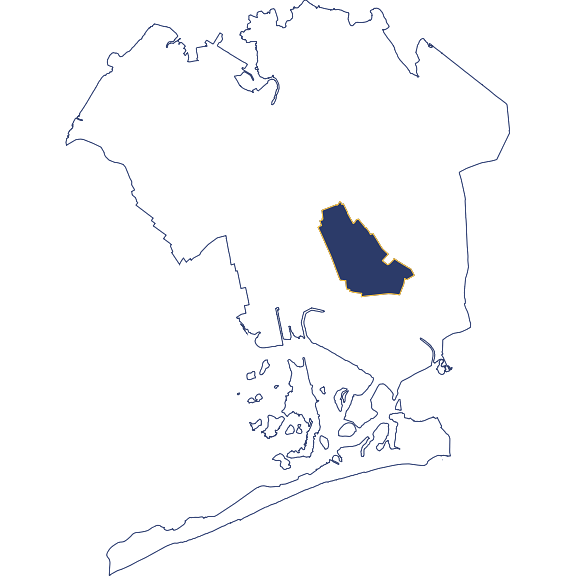
State Assembly, District 32
Background
Please briefly describe your background and why you are running for this office.
I am a government professional and civic leader with deep roots in Southeast Queens. Throughout my career and community involvement, I have seen firsthand the challenges my neighbors and I face, finding affordable housing, getting to work on time, and accessing the services and opportunities they deserve.
I am running for NYS Assembly because Southeast Queens families deserve better. For too long, our community has been underserved, watching resources, investment, and opportunity pass us by while the cost of living keeps rising. We are not okay with the status quo.
The solutions exist. What's missing is the strategy to cut through the bureaucracy, deliver real results, and put our community's needs first. Ive done this through being a chief of staff in NYS Assembly, managing external affairs and community outreach at JFK Redevelopment, creating the first of its kind largest festivals garnering 10,000 people and creating a economic engine in my backyard. I am running to be that voice, someone who understands both how government works and what our neighbors actually need.
I am committed to fighting for more affordable housing, reliable transit, clean energy, and a government that works for Southeast Queens — not against it.
How are you differentiated from your opponent(s)? What does your path to victory look like in your district?
What differentiates me is my unique combination of experience, community trust, and proven momentum. I have spent my career working in and outside of government, as a policymaker and across multiple sectors — giving me a rare understanding of how housing, transit, energy, and economic development must intersect to make Southeast Queens whole. I don't just understand the problems; I understand the systems that create them and how to change them.
My opponents dont match that depth of experience. While others may talk about change, I have spent years actually building the relationships, knowledge, and credibility needed to deliver it in Albany.
Our campaign's momentum reflects that. We have raised the most money among viable candidates garnering over $110k in just four weeks including matching funds, earned the endorsement of Queens Borough President, and are running the strongest grassroots operation in this race. We are knocking the most doors, having the most conversations, and building the broadest coalition this district has seen.
My path to victory is straightforward: neighbor by neighbor, block by block. Southeast Queens voters are ready for a representative who truly understands their community, knows how government works, and has the drive and resources to win. We are that campaign.
Government Delivery Reform
SEQRA reform: New York should reform the State Environmental Quality Review Act (SEQRA) to reduce the time and scope of environmental review for housing, transit, renewable energy, and resilience projects.
Agree
Civil Service Reform: New York should make it easier for the government to hire the staff they need by making exams more job-relevant, allowing work experience to count instead of degrees, and enabling temporary appointments.
Agree
Capital Project Procurement Reform: New York State should give NYC more procurement flexibility (such as expanded challenge-based procurement and "other transaction authority" style contracting) in order to speed up the delivery of capital projects.
Agree
Additional context
Across all three areas, my position is the same: process should serve outcomes, not obstruct them. These reforms are not about cutting corners, they are about building government that actually works for New Yorkers.
Housing
Expanding Housing: Addressing the housing affordability crisis requires increasing production of all kinds of housing, including market-rate units.
Agree
Homelessness/Expedited permanent supportive housing: Addressing the homelessness crisis requires a housing-first solution such as expedited permanent supportive housing for those in need, because shelters are not a permanent solution.
Agree
Transit Oriented Development: New York should allow for more housing to be built near existing transit stations including near commuter rail stations, even if that requires changing zoning.
Agree
Build Code Reform: New York, at the city and state level, should embrace building code and licensing reforms (e.g., smaller elevator size requirements, modular construction, mass timber) that make it cheaper to build housing while maintaining safety.
Agree
Additional context
Southeast Queens is one of the most transit-underserved areas in New York City. Our community largely depends on the E, F, J, and Z lines , corridors that are already operating at or beyond capacity. Any transit-oriented development strategy must be paired with real investment in transit infrastructure first, not just added density on top of an already strained system.
I support transit-oriented development in principle, but smart growth in Southeast Queens means ensuring that new housing does not outpace the transit capacity needed to support it. We need thoughtful, context-sensitive zoning that reflects the unique infrastructure realities of our community — not a one-size-fits-all approach that further burdens residents who already face long, crowded commutes.
Before we build up around our existing stations, we need a serious commitment to expanding transit access — including better bus service, commuter rail improvements, and long-overdue infrastructure investments — so that growth in this community is truly sustainable and benefits the people who already live here.
Transit
Transit Cost Containment: New York should act in a coordinated fashion to reduce the cost of building new transit projects, including reducing the size of stations and allowing the temporary disruption of street traffic to more quickly complete projects.
Agree
Busway Expansion: New York City should: 1) expand the number of busways (routes where private cars are banned); and 2) eventually pursue bus rapid transit lines to increase bus speeds throughout the city.
Agree
Automated Camera Expansion: New York should allow New York City to expand automated camera enforcement, including red light cameras, bus lane cameras, and bike lane cameras, to make streets safer.
Agree
Parking: New York City should charge more for parking and reduce or eliminate free street parking.
This is where a one-size-fits-all approach fails Southeast Queens. Unlike Manhattan or Brooklyn, Southeast Queens is a transit desert where many residents have no practical alternative to driving. Eliminating or significantly reducing affordable parking before adequate transit alternatives exist would place an unfair burden on working families in our community. I support smart parking policy that reflects neighborhood realities — not blanket citywide mandates that ignore the needs of car-dependent communities.
Additional context
Across transit cost containment, busway expansion, and camera enforcement, my position is rooted in the specific realities of Southeast Queens.
First, reducing the cost of transit construction is not just a fiscal issue, it is an equity issue. SEQ has been waiting decades for meaningful transit investment precisely because runaway construction costs have made expansion financially prohibitive. When we build smarter and cheaper, underserved communities like ours finally get to move up the priority list.
On busway and bus rapid transit expansion, this community's residents are among the most transit-dependent in the city yet among the least served. Faster, more reliable bus service is not a luxury for our community, it is a necessity. I strongly support expanding BRT and dedicated bus lanes where they genuinely improve service, with community input guiding implementation.
On automated camera enforcement, I support tools that make our streets safer, but with clear accountability. Any expansion must include strong oversight to ensure enforcement is applied fairly and does not disproportionately burden working families. Safety and equity must go hand in hand.
In all three areas, the throughline is the same: AD32 deserves the same level of transit investment, service quality, and street safety that other parts of the city take for granted.
Clean Energy
Solar Energy: New York State should preempt local regulations that effectively ban solar projects by establishing a ceiling on restrictions and should streamline solar permitting by adopting automated systems in order to enable more solar energy.
I support expanding solar access and streamlining permitting, but we must address a real concern Southeast Queens residents are already raising: even with solar, Con Edison bills remain high. Expanding solar deployment must go hand in hand with stronger oversight of solar panel companies, utility accountability, and transparent billing practices that ensure families actually see the cost savings they were promised. More solar is only a win if it translates to real relief for working families.
Nuclear Energy Development: New York should expand its nuclear energy capacity by building new reactors and extending the life of existing plants in order to hit the goal of 100% zero-emission electricity generation by 2040.
Agree
Additional context
Hitting our 2040 zero-emission targets requires an honest conversation about all available clean energy sources. Nuclear energy provides reliable, carbon-free baseload power that renewables alone cannot yet fully replace. Extending the life of existing plants and responsibly exploring new capacity is a pragmatic step toward meeting our climate goals without compromising grid reliability or driving up energy costs for New Yorkers.
Candidate Statement
Abundance Examples from Your Work: Please describe a specific example from your record (legislative, professional, or community work) where you championed a project or policy that is aligned with our agenda. What obstacles did you overcome, and what was the outcome?
Throughout my career I have consistently championed policies that align with the Abundance agenda, breaking down barriers, building coalitions, and delivering real results for communities that have been overlooked.
As Chief of Staff, I advocated for and helped reshape bus line routes to better serve underserved communities, recognizing that transit access is fundamental to economic opportunity. That work required navigating multiple agencies, building consensus among stakeholders, and pushing back against institutional inertia, exactly the kind of cross-sector coalition building that real change requires.
It was my idea to establish Juneteenth as a New York State holiday, an initiative that required building broad support across cultural, civic, and government sectors. Overcoming skepticism and bureaucratic resistance, we succeeded in delivering meaningful recognition that celebrates Black heritage and history statewide.
I have also been a consistent advocate for responsible development and environmental justice in Southeast Queens, working to ensure growth serves existing residents. I helped build bridges between community stakeholders and developers, ensuring that downtown development reflected community needs rather than displacing them. I also advocated for 421a tax credit reform to ensure housing incentives actually delivered affordable units for working families rather than simply benefiting developers.
Legislative Priorities: If elected (or re-elected) to the State Assembly/Senate, what are your top three legislative priorities? Please be specific about the policies you would advance and what you hope to achieve.
Transit Investment and Bus Rapid Transit for Southeast Queens: securing dedicated transit investment for Southeast Queens,one of the most underserved transit communities in New York City. I will advocate for expanded bus rapid transit corridors, improved frequency and reliability on the E, F, J, and Z lines, and better first and last mile connections that reduce car dependence. I will push for Southeast Queens to be prioritized in MTA capital planning and fight to ensure that transit funding is distributed equitably across all five boroughs. Every New Yorker deserves reliable, affordable transit. Climate Resilience and Environmental Justice: advancing climate resilience legislation that protects frontline communities like Southeast Queens from flooding, extreme heat, and aging infrastructure. I will push for targeted investment in green infrastructure, stormwater management, and heat mitigation in communities that bear the greatest climate burden but have received the least support. I will also advocate for stronger environmental justice protections that ensure polluting facilities are not disproportionately sited in communities of color, and that clean energy benefits, including real utility cost savings, reach the working families who need them most. Lastly, Property Tax Equity and Benefits Access for All Southeast Queens Residents: addressing the financial burden facing Southeast Queens residents from two directions; as homeowners and as working families navigating complex government systems.
First, I will advance property tax equity reform for Southeast Queens homeowners. Our community's longtime homeowners, many of them middle class families of color who have invested everything in their homes are being disproportionately burdened by a property tax system that is outdated, inequitable, and frankly broken. I will fight for reforms that ensure homeowners in Southeast Queens are assessed fairly, benefit from meaningful exemptions, and are not taxed out of the neighborhoods they built and sustained for generations.
Second, I will push to dramatically improve public benefits access for renters and working families in our community. Too many Southeast Queens residents qualify for housing assistance, healthcare, childcare, and energy relief programs but never receive them, not because they don't need help, but because our systems are too complicated to navigate. I will advocate for streamlined enrollment, community-based outreach, and technology-driven solutions that ensure every eligible resident actually receives the support they are entitled to.
Together these reforms address the same fundamental problem from two angles: Southeast Queens residents work hard, play by the rules, and deserve a government that works just as hard for them.