
Abundance New York 2026 State Legislative Candidate Questionnaire
Steven Raga
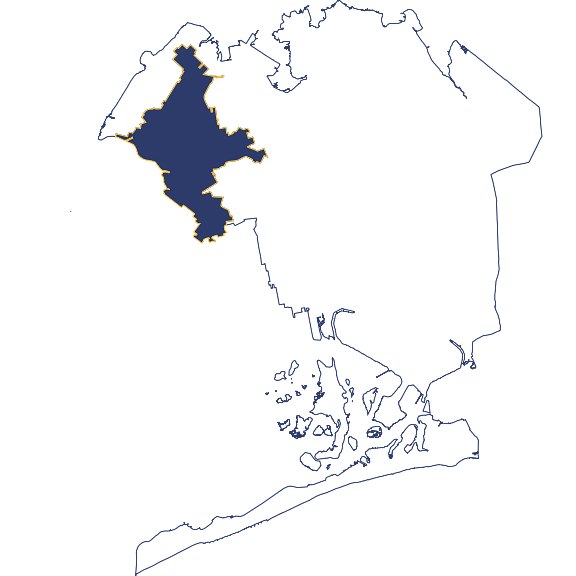
State Senate, District 12
Background
Please briefly describe your background and why you are running for this office.
I was born and raised in Queens as the son of immigrant parents, and my upbringing instilled in me a deep commitment to public service and equity. Before joining the Assembly, I worked in community advocacy and policy, focusing on housing, education, and immigrant rights, which gave me firsthand insight into the challenges families face every day.
I’m running for this office because I want to ensure that every New Yorker has access to safe housing, quality education, healthcare, and fair treatment under the law. Representing a diverse district like mine means showing up for people, amplifying their voices in Albany, and fighting for progressive policies that reflect the values of our communities. My goal is to combine legislative action with community engagement to create tangible improvements in the lives of my constituents.
How are you differentiated from your opponent(s)? What does your path to victory look like in your district?
What differentiates me from my opponents is my proven record of action, deep community roots, and progressive vision. I don’t just talk about the issues — I’ve secured funding for affordable and supportive housing, advocated for immigrant and LGBTQ+ rights, and consistently shown up alongside constituents at rallies, town halls, and community events. My work reflects both practical results and a commitment to equity, not just promises.
My path to victory is grounded in engaging the diverse communities of Queens, listening to their needs, and turning that engagement into real participation at the ballot box. By connecting with voters in neighborhoods like Jackson Heights, Astoria, and Woodside, continuing outreach to young people, and mobilizing grassroots supporters, I plan to build a winning coalition that reflects the values and priorities of the district.
Government Delivery Reform
SEQRA reform: New York should reform the State Environmental Quality Review Act (SEQRA) to reduce the time and scope of environmental review for housing, transit, renewable energy, and resilience projects.
Agree
Civil Service Reform: New York should make it easier for the government to hire the staff they need by making exams more job-relevant, allowing work experience to count instead of degrees, and enabling temporary appointments.
Agree
Capital Project Procurement Reform: New York State should give NYC more procurement flexibility (such as expanded challenge-based procurement and "other transaction authority" style contracting) in order to speed up the delivery of capital projects.
Agree
Additional context
(No response)
Housing
Expanding Housing: Addressing the housing affordability crisis requires increasing production of all kinds of housing, including market-rate units.
Agree
Homelessness/Expedited permanent supportive housing: Addressing the homelessness crisis requires a housing-first solution such as expedited permanent supportive housing for those in need, because shelters are not a permanent solution.
Agree
Transit Oriented Development: New York should allow for more housing to be built near existing transit stations including near commuter rail stations, even if that requires changing zoning.
Agree
Build Code Reform: New York, at the city and state level, should embrace building code and licensing reforms (e.g., smaller elevator size requirements, modular construction, mass timber) that make it cheaper to build housing while maintaining safety.
Agree
Additional context
(No response)
Transit
Transit Cost Containment: New York should act in a coordinated fashion to reduce the cost of building new transit projects, including reducing the size of stations and allowing the temporary disruption of street traffic to more quickly complete projects.
Agree
Busway Expansion: New York City should: 1) expand the number of busways (routes where private cars are banned); and 2) eventually pursue bus rapid transit lines to increase bus speeds throughout the city.
Agree
Automated Camera Expansion: New York should allow New York City to expand automated camera enforcement, including red light cameras, bus lane cameras, and bike lane cameras, to make streets safer.
Agree
Parking: New York City should charge more for parking and reduce or eliminate free street parking.
Agree
Additional context
I am a proud sponsor of the Automated Curb Enforcement bill in the Assembly and will continue to make this a priority in the Senate if elected.
Clean Energy
Solar Energy: New York State should preempt local regulations that effectively ban solar projects by establishing a ceiling on restrictions and should streamline solar permitting by adopting automated systems in order to enable more solar energy.
Agree
Nuclear Energy Development: New York should expand its nuclear energy capacity by building new reactors and extending the life of existing plants in order to hit the goal of 100% zero-emission electricity generation by 2040.
Agree
Additional context
(No response)
Candidate Statement
Abundance Examples from Your Work: Please describe a specific example from your record (legislative, professional, or community work) where you championed a project or policy that is aligned with our agenda. What obstacles did you overcome, and what was the outcome?
One example that aligns with the Abundance Agenda’s focus on abundant housing and ending homelessness is my work in the State Legislature to secure major funding for housing preservation and stability. In the 2025 state budget process, I secured $110 million for the preservation of Mitchell‑Lama housing statewide — including critical support for the Big Six in Woodside, which provides deeply affordable homes to nearly 1,000 families. This investment was pushed back against proposals to cut housing support and reflected my commitment to protecting and increasing the supply of affordable, stable housing for working and middle‑income New Yorkers.
At the same time, I’ve advocated for fully funding the Housing Access Voucher Program, a proven tool to prevent homelessness and help families stay housed amid rising rents. Securing these resources has required building coalitions with fellow legislators, tenant advocates, and community groups, overcoming resistance from budget pressure points and competing priorities to deliver concrete results that make housing more abundant and attainable.
Through this work, I’ve demonstrated that expanding housing availability and stability — two core tenets of the Abundance Agenda — can be achieved through persistent legislative advocacy, community partnership, and prioritizing investments that meet people’s basic needs.
Legislative Priorities: If elected (or re-elected) to the State Assembly/Senate, what are your top three legislative priorities? Please be specific about the policies you would advance and what you hope to achieve.
Affordable and Supportive Housing: I will continue to expand access to affordable housing and protect existing units through programs like the Housing Access Voucher Program and targeted capital funding for preservation and new construction. My goal is to ensure that every family and individual in Queens and across New York can live in safe, stable housing without fear of displacement.
Immigrant Rights and Sanctuary Protections: I will advance legislation that strengthens legal aid and social services for immigrants, protects asylum seekers, and ensures that New York’s sanctuary policies are fully enforced. I aim to create an environment where immigrant families can thrive without fear and have equitable access to housing, healthcare, and education.
Equity and Inclusion for Marginalized Communities: I will champion policies that protect LGBTQ+ New Yorkers, advance reproductive justice, and address systemic inequities in healthcare, education, and public safety. This includes supporting anti-discrimination protections, access to mental health resources for LGBTQ+ youth, and programs that empower historically marginalized communities.
My overarching goal is to deliver tangible, equitable outcomes for residents of all backgrounds while ensuring that New York continues to lead on progressive, inclusive policies.