
Abundance New York 2026 State Legislative Candidate Questionnaire
Samra Brouk
State Senate, District 55
- Please briefly describe your background and why you are running for this office.
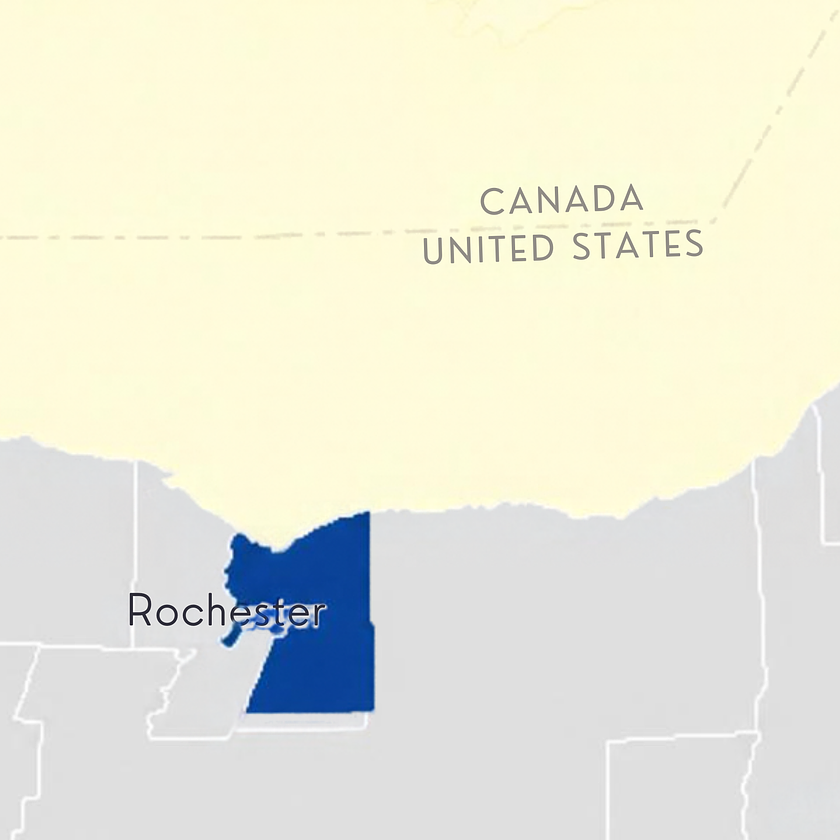
- Senator Samra Brouk was elected to represent New York’s 55th Senate District in November 2020, making her the first Black woman from Upstate New York and the first Black person from the Greater Rochester Area to serve in the New York State Senate. The 55th Senate District includes the City of Rochester's east side and several towns throughout Monroe County.
As the Chair of the Senate Committee on Mental Health, Samra has prioritized improving access to critical mental health resources. She works proactively to address the intersection of mental health with education, substance misuse, criminal justice, healthcare, race, and cultural competence. She serves on the Health, Children and Families, Veterans, Homeland Security and Military Affairs, Consumer Protection, Cities 2, and Internet and Technology Committees and is Co-Chair of the Joint Senate Task Force on Opioids, Addiction, and Overdose Prevention and the Joint Legislative Public Hearing on the Mental Hygiene Executive Budget.
Before her time in the New York State Senate, Senator Brouk served as a United States Peace Corps volunteer for two years as a health educator in rural Guatemala. Upon returning to the United States, she continued her career in the nonprofit sector, focusing on protecting the environment, helping seniors age in place, and addressing education inequities. - How are you differentiated from your opponent(s)? What does your path to victory look like?
- The race requires extensive field operations and mailers to drive voter turnout around a $1,000,000 in expenditures. In 2024, we secured 97,000+ votes to win. I will be continuing this work, and differentiating myself from my opponent, by continuing to stand with all of those in our community.
— DEMOCRACY AND DELIVERY —
- Respecting the Democratic Process. We believe in a democracy that delivers, and that includes maintaining a commitment to democratic norms. New York should not take steps to limit access to the ballot. The legitimacy of free and fair elections should not be subverted, and their results should not be challenged after being audited and/or upheld in the courts.
- Agree
- Increasing Focus on Outcomes: New York should revisit and update outdated rules on hiring, procurement, and approvals for infrastructure changes to ensure our protocols are aligned with our values—and should focus on actual outcomes achieved rather than money spent.
- Agree
- Civil Service Reform: New York should make it easier for the government to hire the staff they need by making exams more job-relevant, allowing work experience to count instead of degrees, and enabling temporary appointments. (See agenda item #2)
- Agree
- Capital Project Procurement Reform: New York State should give NYC more procurement flexibility (such as expanded challenge-based procurement and "other transaction authority" style contracting) in order to speed up the delivery of capital projects.(See agenda item #4)
- As a representative not representing New York City, I am not as familiar with their procurement process, however where-ever government can become a better partner in delivering for our constituents I will listen to proposals.
- City Charter Reform: New York City voters should approve “COGE” ballot questions 1-4 to accelerate nonprofit contracts, building permits, outdoor dining application review, and bike lane creation.
- Other - Again as a representative not representing New York City, I am not as familiar with their ballot proposals, however, making New York more multi-modal is something I support.
- — HOUSING AND HOMELESSNESS —
- Expanding Housing: Addressing the housing affordability crisis requires increasing production of all kinds of housing, including market-rate units, across all neighborhoods and municipalities.
- Agree
- Transit Oriented Development: New York should allow for more housing to be built near existing transit stations including near commuter rail stations, even if that requires changing zoning. (See agenda items #8 and #9)
- Agree
- Property Tax Reform: New York state should reform the property tax system to be fairer, especially for renters; easier to understand; and more progressive. (See agenda item #11)
- Agree
- Homelessness/Expedited permanent supportive housing: Addressing the homelessness crisis requires a housing-first solution such as expedited permanent supportive housing for those in need, because shelters are not a permanent solution. (See agenda item #12)
- Agree
- Build Code Reform: New York, at the city and state level, should embrace building code and licensing reforms (e.g., smaller elevator size requirements, modular construction, mass timber) that make it cheaper to build housing while maintaining safety. (See agenda items #15-17)
- Agree
- Feel free to share any additional context on your answers for this section below.
- As the State Sentate Chair of Mental Health, helping our homeless neighbors, who are also often dealing with a mental health diagnosis, is paramount. And a housing first approach is one of the strongest tools we can use in this crisis.
- — PUBLIC TRANSIT AND THE PUBLIC REALM —
- Reducing Car Dependency: New York should aspire to reduce the number of cars on the road and vehicle miles traveled, by expanding access to high-quality, affordable, and safe public transit and micro-mobility.
- Agree
- Transit Cost Containment: New York should act in a coordinated fashion to reduce the cost of building new transit projects, including reducing the size of stations and allowing the temporary disruption of street traffic to more quickly complete projects. (See agenda item #19)
- Agree
- Busway Expansion: New York City should: 1) expand the number of busways (routes where private cars are banned); and 2) eventually pursue bus rapid transit lines to increase bus speeds throughout the city. (See agenda item #20)
- Agree
- Parking: New York City should charge more for parking and reduce or eliminate free street parking, and should eliminate parking mandates for new homes. (See agenda items #18 and #26)
- Agree
— CLEAN ENERGY AND RESILIENCY —
- Abundant Clean Energy: New York should prioritize private and public sector construction of new renewable energy, grid electrification and transmission upgrades, and resiliency infrastructure to meet our climate goals and adapt our infrastructure for the future.
- Agree
- Solar Energy: New York State should preempt local regulations that effectively ban solar projects by establishing a ceiling on restrictions and should streamline solar permitting by adopting automated systems in order to enable more solar energy. (See agenda items #32 & #33)
- Agree
- New Energy Development: Beyond solar, New York should expand its nuclear energy capacity—including by building new reactors and extending the life of existing plants—and advance geothermal projects in order to hit the goal of 100% zero-emission electricity generation by 2040. (See agenda items #39 & #40)
- Agree
- Resiliency Authority: The State should create and empower a public authority to address New York's resilience needs led by a Chief Resilience Officer and guided by a collaborative statewide resilience plan that prioritizes protecting socially vulnerable communities. (See agenda item #37)
- Agree
— RECORD AND PRIORITIES —
- Abundance Examples from Your Work: Please describe a specific example from your record (legislative, professional, or community work) where you championed a project or policy that is aligned with our agenda. What obstacles did you overcome, and what was the outcome?
- Each and every state budget, as chair of mental health, I have fought for increased funding to help our homeless neighbors, and to help those on the street needing mental health and substance use care - care from health professionals not law enforcement. I have pushed back against outdated examples of care, and have secured funding for Daniel’s Law pilots which will see localities responding with healthcare workers and peers. I have secured housing first funding and capital dollars for communities across the state. And I will continue these initiatives if re-elected.
- Legislative Priorities: If elected (or re-elected), what are your top three priorities? Please be specific about the policies you would advance and what you hope to achieve.
- Transforming New York’s Mental Health Systems - For too long, New York has underinvested in mental health, and has siphoned off resources from those who need it most. Now, due to years of inadequate funding and the additional stress of the COVID-19 pandemic, New York is on the brink of crisis. As Chair of the Senate Committee on Mental Health, I am proud of some of the progress we have made—from giving workers their first cost of living adjustment in 12 years, to establishing the state’s 9-8-8’s crisis line. But, there is much left to do. I believe that fixing our mental healthcare system starts with supporting our mental health workforce. We need to ensure that workers work in organizations that can maintain safe staffing levels, are compensated fairly, and have the tools and resources they need to care for their patients.
Supporting Mothers and Families - New York has an abysmal maternal mortality rate, especially compared to states with similar resources. In New York, Black mothers are approximately three times as likely as their white counterparts to die from a pregnancy complication, with over three quarters of those deaths being preventable. We cannot support children and families without addressing this crisis. I’ve introduced several bills to make sure that mothers are receiving the support they deserve, and if reelected, I intend to continue advocating for their passage.
Reinvesting in Underserved Communities - We know that many families live in communities without ample resources—whether that is a grocery store or a doctor’s office—and that the long term effects of that can affect generations of families and their wellbeing. While there is no one piece of legislation that can undo the decades of underinvestment and neglect, we need to take common-sense legislative steps that can provide access to resources, affordable housing, and that connects people to well-paying jobs.