
Abundance New York 2026 State Legislative Candidate Questionnaire
Nathaniel Hezekiah
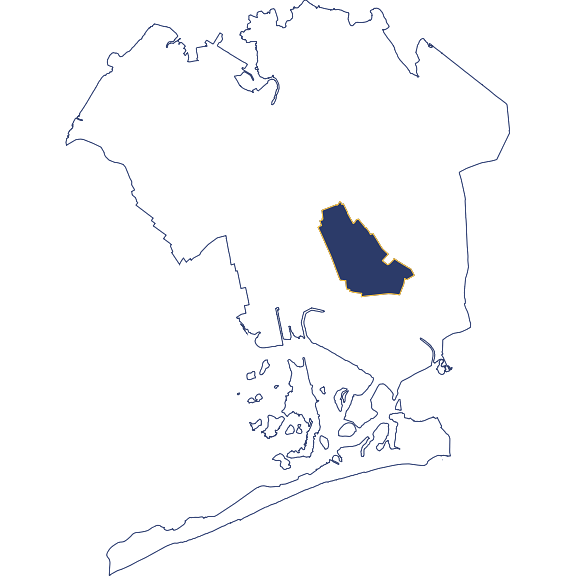
State Assembly, District 32
Background
Please briefly describe your background and why you are running for this office.
My name is Nathaniel Hezekiah, III, and I am running for the 32nd Assembly District to serve as your next New York State assemblymember. I witnessed injustice at an early age when my father and step father died from gun violence. I knew from that very moment of pain, I was destined to equalize the paradigm for those who are marginalized, and stand up for what is right, even if it isn’t easy. For me, this is personal, not politics.
With vision, courage and persistence, together, we can fight for economic justice and mobility for our communities, eradicate violence and maintain safer neighborhoods, build and maintain affordable housing for all, remove barriers and expand on access and quality of education, and ensure healthcare is accessible for everyone.
I have been with you in the community for 20+ years:
● Prioritizing safe streets
● Volunteering with our seniors, youth and families around food insecurity
● Supporting our small businesses
● Facilitating a $5 million+ investment to MWBE’s for ongoing work with JFK development
● Championing projects through the $15 million+ earmarked for affordable housing efforts,
including the Greater Allen Housing Development
● Developing thousands in scholarship materials for our youth, engaging scores of our
public schools annually, and managing supportive funding for PAL and YMCA
Let’s continue to rise up together for Rochdale and South Jamaica Queens and allow real
transformation to move forward!
How are you differentiated from your opponent(s)? What does your path to victory look like in your district?
I am running for the 32nd Assembly District not out of political ambition, but out of a deeply personal calling to serve. At an early age, I experienced the devastating impact of gun violence when both my father and stepfather lost their lives. That pain shaped me, but it also gave me purpose. In that moment, I knew I was destined to fight for justice, to stand up for those who are marginalized, and to work toward creating safer, more equitable communities. For me, this is not politics—it is personal.
What sets me apart from my opponents is not just my story, but my lifelong commitment to this community. For more than 20 years, I have been actively engaged in Rochdale and South Jamaica, Queens. I am not new to this work, and I am not new to the people. I have been here—listening, serving, and working alongside residents to address the real challenges we face every day.
I have made it a priority to support safer streets and tackle the r
Government Delivery Reform
SEQRA reform: New York should reform the State Environmental Quality Review Act (SEQRA) to reduce the time and scope of environmental review for housing, transit, renewable energy, and resilience projects.
I support targeted reforms that make SEQRA more efficient and predictable without weakening environmental protections or community input. We must ensure that projects that benefit working families—especially affordable housing and clean energy—are not unnecessarily delayed, while still holding developers accountable and protecting public health.
Civil Service Reform: New York should make it easier for the government to hire the staff they need by making exams more job-relevant, allowing work experience to count instead of degrees, and enabling temporary appointments.
Agree
Capital Project Procurement Reform: New York State should give NYC more procurement flexibility (such as expanded challenge-based procurement and "other transaction authority" style contracting) in order to speed up the delivery of capital projects.
Agree
Additional context
(No response)
Housing
Expanding Housing: Addressing the housing affordability crisis requires increasing production of all kinds of housing, including market-rate units.
I believe that addressing our housing crisis demands more supply of housing. However, in communities like Southeast Queens, we must ensure that new development includes strong affordability requirements and protections against displacement. We cannot build our way out of this crisis with luxury housing alone. We need a balanced approach that prioritizes deeply affordable housing, supports homeownership opportunities, and ensures that long-time residents can remain in their communities.
Homelessness/Expedited permanent supportive housing: Addressing the homelessness crisis requires a housing-first solution such as expedited permanent supportive housing for those in need, because shelters are not a permanent solution.
Agree
Transit Oriented Development: New York should allow for more housing to be built near existing transit stations including near commuter rail stations, even if that requires changing zoning.
Agree
Build Code Reform: New York, at the city and state level, should embrace building code and licensing reforms (e.g., smaller elevator size requirements, modular construction, mass timber) that make it cheaper to build housing while maintaining safety.
Agree
Additional context
I support building more housing near transit, because it creates more accessible, sustainable, and connected communities.
In Southeast Queens, we have transit assets that are underutilized, and we should leverage them to create housing opportunities. However, any zoning changes must include community input, infrastructure investment, and strong affordability requirements to ensure that development benefits current residents and does not lead to displacement.
Transit
Transit Cost Containment: New York should act in a coordinated fashion to reduce the cost of building new transit projects, including reducing the size of stations and allowing the temporary disruption of street traffic to more quickly complete projects.
I agree that New York must take a more coordinated and efficient approach to reducing the cost of building transit infrastructure. We cannot afford delays and excessive costs when our communities need better transportation options now. At the same time, any cost-saving measures—such as temporary street disruptions—must be carefully managed to minimize impacts on local residents, small businesses, and emergency services. The goal should be to deliver high-quality transit projects faster and more affordably, without sacrificing accessibility or community needs.
Busway Expansion: New York City should: 1) expand the number of busways (routes where private cars are banned); and 2) eventually pursue bus rapid transit lines to increase bus speeds throughout the city.
Agree
Automated Camera Expansion: New York should allow New York City to expand automated camera enforcement, including red light cameras, bus lane cameras, and bike lane cameras, to make streets safer.
I support expanding automated camera enforcement as a tool to improve street safety and reduce dangerous driving behaviors. However, enforcement must be fair and not disproportionately burden working-class communities. Revenue from these programs should be reinvested into the very neighborhoods impacted—funding street safety improvements, transit access, and community infrastructure.
Parking: New York City should charge more for parking and reduce or eliminate free street parking.
I believe we need a balanced and thoughtful approach to parking policy. In many parts of New York City, reducing parking may be feasible due to strong transit access. However, in communities like Southeast Queens, where residents often rely on cars for work, family responsibilities, and daily life, parking remains essential. Before considering significant changes, we must first invest in reliable and accessible transit options. Any adjustments to parking policy should be gradual, community-informed, and sensitive to the needs of working families.
Additional context
(No response)
Clean Energy
Solar Energy: New York State should preempt local regulations that effectively ban solar projects by establishing a ceiling on restrictions and should streamline solar permitting by adopting automated systems in order to enable more solar energy.
I agree that New York should take steps to expand solar energy by streamlining permitting and addressing local regulations that unnecessarily block clean energy projects. At the same time, we must ensure that communities retain a voice in how projects are implemented and that deployment is done equitably. Too often, underserved communities are left out of the benefits of clean energy.
Nuclear Energy Development: New York should expand its nuclear energy capacity by building new reactors and extending the life of existing plants in order to hit the goal of 100% zero-emission electricity generation by 2040.
Nuclear energy can play a role in providing consistent, carbon-free power, particularly as we transition away from fossil fuels. However, any expansion must be approached with careful consideration of safety, cost, environmental impact, and community input. My priority is ensuring that our clean energy transition is reliable, affordable, and equitable—while investing aggressively in renewables like solar and wind, and creating good-paying jobs in the process.
Additional context
(No response)
Candidate Statement
Abundance Examples from Your Work: Please describe a specific example from your record (legislative, professional, or community work) where you championed a project or policy that is aligned with our agenda. What obstacles did you overcome, and what was the outcome?
I have played an active role in advancing equitable economic development tied to the redevelopment of JFK Airport, with a strong focus on ensuring that Minority- and Women-Owned Business Enterprises (MWBEs) were not left out of the process.
Legislative Priorities: If elected (or re-elected) to the State Assembly/Senate, what are your top three legislative priorities? Please be specific about the policies you would advance and what you hope to achieve.
1. Accelerating Affordable Housing Production
I will advance policies that streamline approvals and reduce unnecessary delays in building housing, while strengthening affordability requirements. This includes reforming processes like environmental review where appropriate, expanding incentives for deeply affordable housing, and increasing support for homeownership opportunities in communities like Southeast Queens.
2. Expanding Economic Opportunity and MWBE Access
I will work to increase access to state contracts and capital for MWBEs by reforming procurement processes, reducing barriers to entry, and ensuring accountability in how funds are distributed. My goal is to ensure that economic growth—especially from major projects—translates into real opportunities for local businesses and workers.
3. Modernizing Infrastructure and Transit Access
I will support policies that accelerate the delivery of transit and infrastructure projects, particularly in underserved communities. This includes improving bus service, investing in transit-oriented development where appropriate, and ensuring that infrastructure investments are delivered faster, more efficiently, and more equitably.