
Abundance New York 2026 State Legislative Candidate Questionnaire
Mike Scala
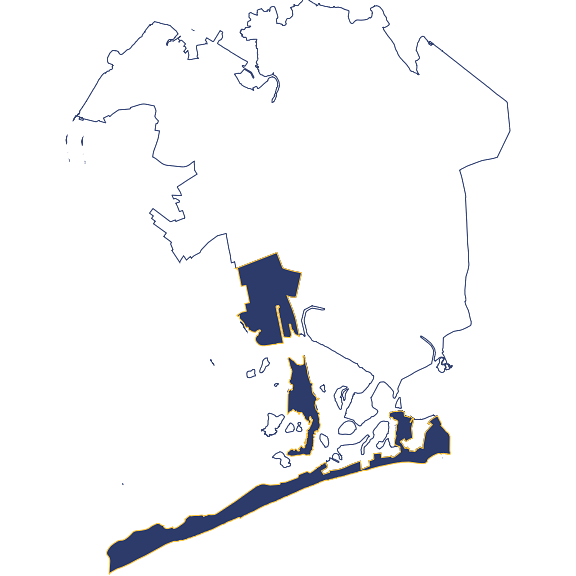
State Assembly, District 23
Background
Please briefly describe your background and why you are running for this office.
I am an attorney with experience in the public and private sectors and a former Democratic nominee for the New York City Council. In past races, I never lost a primary within this Assembly district and am the best situated candidate to win this open seat through my experience in the community. I currently serve as the president of the board of directors for Queens Defenders and counsel to the QueensLink project, and formerly worked as counsel and legislative director in the NYS Senate.
How are you differentiated from your opponent(s)? What does your path to victory look like in your district?
I'm the only candidate running with Albany experience, having drafted legislation that is now state law. I also have a track record of winning the vote in the areas that comprise Assembly District 23, whereas my primary opponent has only run in one part of the district. My fundraising shows I have qualified for matching funds and will be fully funded through small dollar contributions from individuals throughout the district. By contrast, my opponent's fundraising has been almost exclusively limited to one zip code.
Victory will be attained by continuing to reach out to established supporters from prior campaigns and making new connections through direct engagement with constituents in a district where my name recognition is already strongest.
Government Delivery Reform
SEQRA reform: New York should reform the State Environmental Quality Review Act (SEQRA) to reduce the time and scope of environmental review for housing, transit, renewable energy, and resilience projects.
Agree
Civil Service Reform: New York should make it easier for the government to hire the staff they need by making exams more job-relevant, allowing work experience to count instead of degrees, and enabling temporary appointments.
Agree
Capital Project Procurement Reform: New York State should give NYC more procurement flexibility (such as expanded challenge-based procurement and "other transaction authority" style contracting) in order to speed up the delivery of capital projects.
Agree
Additional context
(No response)
Housing
Expanding Housing: Addressing the housing affordability crisis requires increasing production of all kinds of housing, including market-rate units.
Agree
Homelessness/Expedited permanent supportive housing: Addressing the homelessness crisis requires a housing-first solution such as expedited permanent supportive housing for those in need, because shelters are not a permanent solution.
Agree
Transit Oriented Development: New York should allow for more housing to be built near existing transit stations including near commuter rail stations, even if that requires changing zoning.
Agree
Build Code Reform: New York, at the city and state level, should embrace building code and licensing reforms (e.g., smaller elevator size requirements, modular construction, mass timber) that make it cheaper to build housing while maintaining safety.
Agree
Additional context
In my law practice I represented a group of residents against DHS when it was planning to open a warehouse-style homeless shelter that did not properly serve anyone. It would have been cheaper to provide housing than it was costing taxpayers to shelter vulnerable persons in unsafe conditions.
Through my current work with Queens Defenders, we represent 1,500 clients every year in housing court and operate a free outreach center in Far Rockaway where anyone can receive housing assistance.
Transit
Transit Cost Containment: New York should act in a coordinated fashion to reduce the cost of building new transit projects, including reducing the size of stations and allowing the temporary disruption of street traffic to more quickly complete projects.
Agree
Busway Expansion: New York City should: 1) expand the number of busways (routes where private cars are banned); and 2) eventually pursue bus rapid transit lines to increase bus speeds throughout the city.
We should be doing this without reducing capacity for vehicles, especially in areas where public transit is inadequate and there is too much congestion.
Automated Camera Expansion: New York should allow New York City to expand automated camera enforcement, including red light cameras, bus lane cameras, and bike lane cameras, to make streets safer.
Disagree
Parking: New York City should charge more for parking and reduce or eliminate free street parking.
Disagree
Additional context
We live in an area where many people have to drive, and we should not be seeking to make it harder on them. Public transit projects like the QueensLink, which would create the only north-south subway line in Queens and connect our community to the rest of the borough and city, would alleviate traffic and take cars off the road without "punishing" drivers.
Clean Energy
Solar Energy: New York State should preempt local regulations that effectively ban solar projects by establishing a ceiling on restrictions and should streamline solar permitting by adopting automated systems in order to enable more solar energy.
Agree
Nuclear Energy Development: New York should expand its nuclear energy capacity by building new reactors and extending the life of existing plants in order to hit the goal of 100% zero-emission electricity generation by 2040.
Agree
Additional context
(No response)
Candidate Statement
Abundance Examples from Your Work: Please describe a specific example from your record (legislative, professional, or community work) where you championed a project or policy that is aligned with our agenda. What obstacles did you overcome, and what was the outcome?
I have been fighting to expand subway access in Queens for over a decade. When the MTA released an analysis of the QueensLink, I worked with the group in my capacity as counsel to produce a counter study showing that the project would be more feasible and serve more riders than projected. Last year, I worked to ensure funding for the plan was included in the state budget. We now have a study showing the project would create billions of dollars in economic growth, and MTA CEO Janno Lieber recently stated we were taking the right approach.
Legislative Priorities: If elected (or re-elected) to the State Assembly/Senate, what are your top three legislative priorities? Please be specific about the policies you would advance and what you hope to achieve.
Fix the Tier 6 pension system so that public employees have more money in their pockets and can retire with dignity; enact a moratorium on utility rate increases while the state strengthens incentives for cleaner energy; invest in infrastructure upgrades like QueensLink and a trauma center for Rockaway.