Abundance New York 2026 State Legislative Candidate Questionnaire
Michelle Hinchey
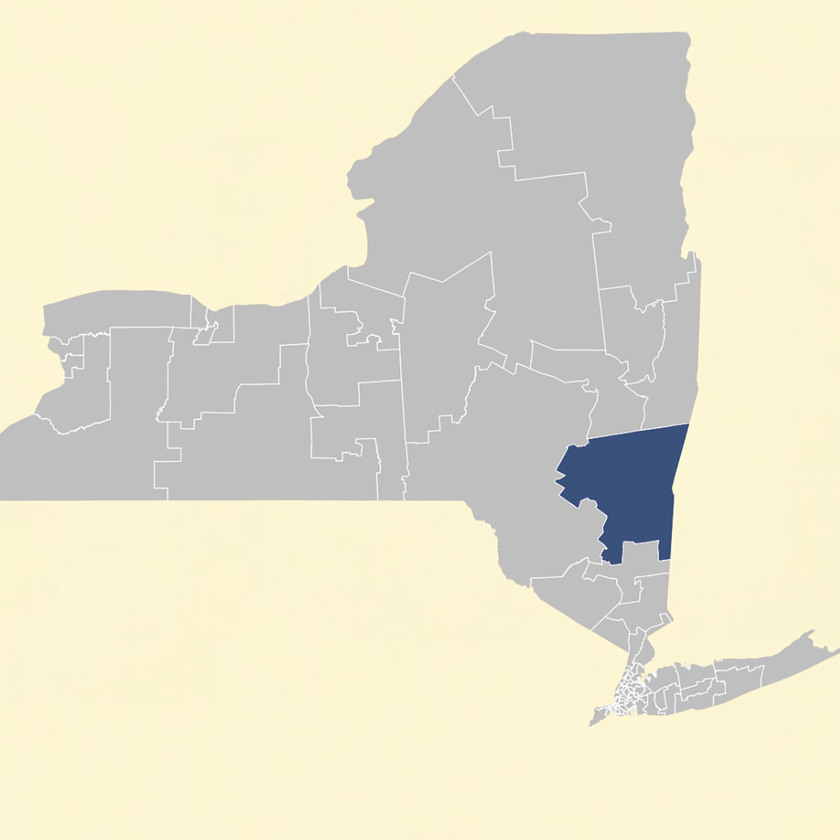
State Senate, District 41
- Please briefly describe your background and why you are running for this office.
- I have the privilege of representing the community that raised me, the community where many of my friends are raising their families and where my family still lives. Many of the issues we faced in our community decades ago are still challenges we contend with today. That’s unacceptable. The Hudson Valley is an incredibly special place, but we tend to not fit the mold for the solutions that exist. I ran to change that and to make sure that State Government works for everyone.
This year, we face both old and new challenges as we confront an affordability crisis, a housing crisis, and devastating policies from the federal government. Our state must robustly invest in policies that support working families and lead on bold, creative solutions so that we can be a model for other states to follow in this time of turmoil. I’m running for reelection to build on the work we’ve done and continue bringing solutions forward to make people’s lives better.- How are you differentiated from your opponent(s)? What does your path to victory look like?
- Over my last three races, we built an incredible team comprised of stalwart grassroots volunteers and paid staff working to reach as many voters as possible through earned and paid media, strong field operations, and events. This team ensured we won all of our difficult elections and improved our margin of victory significantly year over year.
For this year’s reelection campaign, we are building on our previous success and have welcomed new team members who share our progressive vision for a better New York and desire to fight back against the Trump administration.
I am incredibly proud that we’ve built a robust coalition that includes supporters, union members, women’s rights, LGBTQ+ rights, immigrant rights and environmental groups, and community organizations. I am endorsed by WFP, Open NY, AFL-CIO, SEIU 1199, NYIC, Planned Parenthood, CWA, NYSUT, NYSNA, NYLCV, CSEA, PEF, UAW, HTC, SEIU 32BJ, PBA of NYS, Citizen Action, NYS Federation of Democratic Women, Caring Majority Rising and Eleanor’s Legacy. - — DEMOCRACY AND DELIVERY —
- Respecting the Democratic Process. We believe in a democracy that delivers, and that includes maintaining a commitment to democratic norms. New York should not take steps to limit access to the ballot. The legitimacy of free and fair elections should not be subverted, and their results should not be challenged after being audited and/or upheld in the courts.
- Agree
- Increasing Focus on Outcomes: New York should revisit and update outdated rules on hiring, procurement, and approvals for infrastructure changes to ensure our protocols are aligned with our values—and should focus on actual outcomes achieved rather than money spent.
- Agree
- Civil Service Reform: New York should make it easier for the government to hire the staff they need by making exams more job-relevant, allowing work experience to count instead of degrees, and enabling temporary appointments. (See agenda item #2)
- Agree
- Capital Project Procurement Reform: New York State should give NYC more procurement flexibility (such as expanded challenge-based procurement and "other transaction authority" style contracting) in order to speed up the delivery of capital projects. (See agenda item #4)
- I will look into this more, but believe we should review procurement processes in order to ensure we are balancing speed and efficiency with transparent oversight and worker protections.
- City Charter Reform: New York City voters should approve “COGE” ballot questions 1-4 to accelerate nonprofit contracts, building permits, outdoor dining application review, and bike lane creation.
- Agree
- — HOUSING AND HOMELESSNESS —
- Expanding Housing: Addressing the housing affordability crisis requires increasing production of all kinds of housing, including market-rate units, across all neighborhoods and municipalities.
- Agree
- Transit Oriented Development: New York should allow for more housing to be built near existing transit stations including near commuter rail stations, even if that requires changing zoning. (See agenda items #8 and #9)
- Agree
- Property Tax Reform: New York state should reform the property tax system to be fairer, especially for renters; easier to understand; and more progressive. (See agenda item #11)
- Agree
- Homelessness/Expedited permanent supportive housing: Addressing the homelessness crisis requires a housing-first solution such as expedited permanent supportive housing for those in need, because shelters are not a permanent solution. (See agenda item #12)
- Agree
- Build Code Reform: New York, at the city and state level, should embrace building code and licensing reforms (e.g., smaller elevator size requirements, modular construction, mass timber) that make it cheaper to build housing while maintaining safety. (See agenda items #15-17)
- Agree
— PUBLIC TRANSIT AND THE PUBLIC REALM —
- Reducing Car Dependency: New York should aspire to reduce the number of cars on the road and vehicle miles traveled, by expanding access to high-quality, affordable, and safe public transit and micro-mobility.
- Agree
- Transit Cost Containment: New York should act in a coordinated fashion to reduce the cost of building new transit projects, including reducing the size of stations and allowing the temporary disruption of street traffic to more quickly complete projects. (See agenda item #19)
- Agree
- Busway Expansion: New York City should: 1) expand the number of busways (routes where private cars are banned); and 2) eventually pursue bus rapid transit lines to increase bus speeds throughout the city. (See agenda item #20)
- Agree
- Parking: New York City should charge more for parking and reduce or eliminate free street parking, and should eliminate parking mandates for new homes. (See agenda items #18 and #26)
- I agree the city should eliminate parking mandates for new homes, but am still learning about the impact these other items would have on city residents and would want to discuss with my city colleagues.
- — CLEAN ENERGY AND RESILIENCY —
- Abundant Clean Energy: New York should prioritize private and public sector construction of new renewable energy, grid electrification and transmission upgrades, and resiliency infrastructure to meet our climate goals and adapt our infrastructure for the future.
- Agree
- Solar Energy: New York State should preempt local regulations that effectively ban solar projects by establishing a ceiling on restrictions and should streamline solar permitting by adopting automated systems in order to enable more solar energy. (See agenda items #32 & #33)
- We need to balance solar development with protection of farmland. We must reach our renewable energy goals, but not at the expense of taking away prime agricultural land. We cannot trade the climate crisis for a food crisis. The state needs to be more aggressive in finding parnters to build solar on brownfields, parking lots, warehouse roofs, the thruway median, and other smart locations. We should also require renewable energy generation onsite at any project that gets state dollars - like Micron and the Bills Stadium.
- New Energy Development: Beyond solar, New York should expand its nuclear energy capacity—including by building new reactors and extending the life of existing plants—and advance geothermal projects in order to hit the goal of 100% zero-emission electricity generation by 2040. (See agenda items #39 & #40)
- Unsure. I’m still learning and researching nuclear options and don’t have a set position on this at this time
- Resiliency Authority: The State should create and empower a public authority to address New York's resilience needs led by a Chief Resilience Officer and guided by a collaborative statewide resilience plan that prioritizes protecting socially vulnerable communities. (See agenda item #37)
- Agree
— RECORD AND PRIORITIES —
- Abundance Examples from Your Work: Please describe a specific example from your record (legislative, professional, or community work) where you championed a project or policy that is aligned with our agenda. What obstacles did you overcome, and what was the outcome?
- When most people think about the housing crisis, they think about NYC; however, Upstate and the Hudson Valley are also facing significant housing shortages and skyrocketing costs. In my district, we have two of the top two moved to places in the country during the pandemic. That crunched an already scarce housing market and drove up costs over 80%.
I have been focused on creating solutions that solve this issue for my area as most housing programs are designed for larger cities. I created the first ever Upstate Housing Agenda which included restarting the Small Rental Development Initiative which helps fund construction of affordable rental building of 20 units or less, funding the Revitalizing Main Street Program, and funded Restore to help seniors and folks with disabilities afford home repairs to keep them in their homes, among other programs. I wrote and passed the state’s short term rental registry as many homes in my district turned into STRs, taking homes off the market and driving up costs. And I fought for funds in the budget this year to create the state’s first green social housing pilot which will be built in my district. We also successfully increased the number of Land Banks and successfully advocated for ADU expansion and have encouraged our counties to opt into all of these programs.
Thanks to our advocacy, these programs are now funded year over year in the budget after being zeroed out for years prior.
- Legislative Priorities: If elected (or re-elected), what are your top three priorities? Please be specific about the policies you would advance and what you hope to achieve.
- Affordable Housing Development and Incentives:
Affordable housing is a critical gap in the upstate and rural areas I represent. Last year I carried legislation that the Governor signed into law providing tax incentives for nonprofits like Habitat for Humanity and Land Banks to build housing for lower- and middle- income New Yorkers (S1718). I also annually champion increased funding for rural housing support. One bill I continue to push that has not yet been enacted but continues to be a priority would provide funding and technical assistance for mobile home park residents and nonprofits to buy their own land in order to prevent evictions when developers seek to push them out (S3835). I was also successful this year in allocating $8m in the budget for the state’s first green social housing demo project which will be built in my district, and I hope to expand on that next year for more aligned projects.
Changing Procurement Practices for Food Purchasing:
Our procurement laws are entirely out of date with money too often caught up in restrictive rules and red tape. I have a bill that would change how the City, and all municipal governments, can purchase food instead of being from only the lowest responsible bidder, agencies could instead purchase on a values-based model so long as that food is from NYS. We are hoping the Governor signs it by the end of the year. To continue our food work, we will be prioritizing a bill we wrote with Rethink Food to provide a tax credit for restaurants who donate excess meals to food banks and pantries. This ensures the small business can recoup some of the cost of that leftover meal while ensuring the food doesn’t end up in a landfill and instead, gets to someone who needs it.
Utility Reform and reducing costs for consumers:
Too many New Yorkers are facing skyrocketing energy costs. I have passed legislation and continue to carry bills protecting consumers from utility company abuses like back billing or misuse of estimated bills. I also sponsor legislation to ensure that utility costs are accurately reported when they seek rate hikes from the State. But there are also solutions New Yorkers can take into their own hands. I carry and this year passed in the Senate the grid reliability and energy affordability transition (GREAT) Act, which directs utility companies to establish Virtual Power Plant (VPP) programs (S9500). GREAT was introduced just this year and it will be a priority to pass through both houses next session.