
Abundance New York 2026 State Legislative Candidate Questionnaire
Melissa Seale
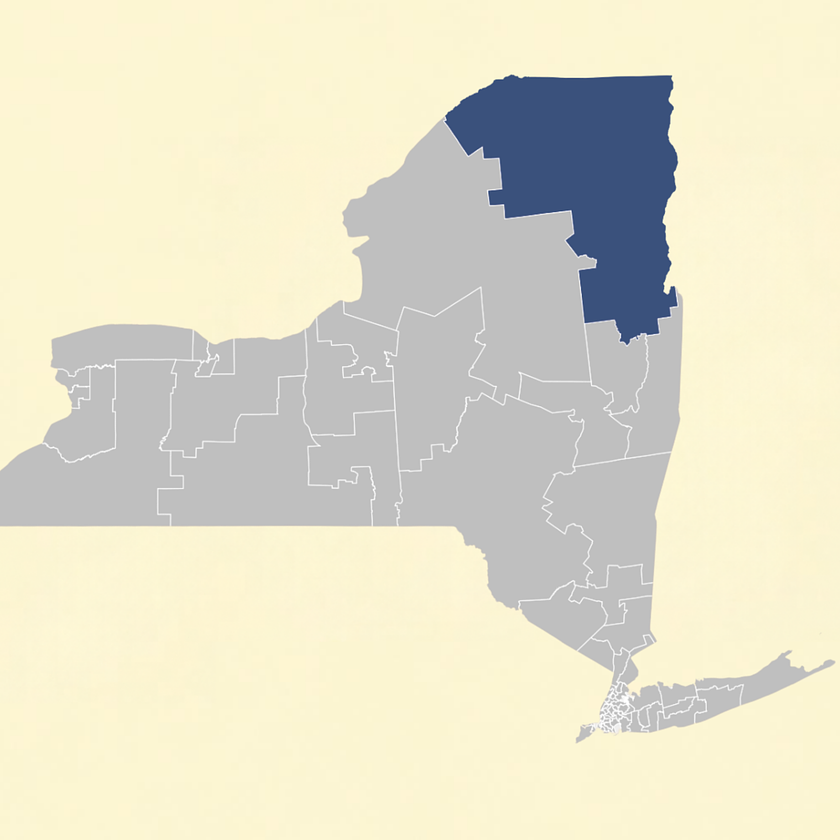
State Senate, District 45
- Please briefly describe your background and why you are running for this office.
- I am a psychiatric nurse practitioner based in Glens Falls, NY. I opened my clinic, Well Child in 2022, serving children ages 3 to 18 years old for their mental health and behavior health needs. I founded the Well Child Foundation, a non profit that further assists families in connecting them with community resources to meet their children's needs as well as connecting children with community to facilitate mental wellness. I have advocated for families and children my entire career, working with legislators. I feel that it is time for me to make a difference by being the voice for those that do not have one in Albany. I will work to improve the lives of families across the north country.
- How are you differentiated from your opponent(s)? What does your path to victory look like?
- I am not a career politician, I am a nurse of 30 years, nurse practitioner and have worked to help families my entire career. I am someone that takes the time to understand and will seek solutions, driving them forward. I want to be a voice for the north country in Albany, especially now when we are facing are most difficult times in regards to affordability, decreased healthcare access, broadband reliability. My opponent has been in the state senate for the past 6 years and has not accomplished anything for the people of district 45, it is time for a change.
In regards to my path to victory, polling is very promising, putting me ahead of my opponent when it comes to matter of healthcare, affordability. I am fundraising to maximize funds for mailings, commercials. We are increasing my press coverage and attending many events, meeting leaders across the north country. I am working with Parkside to assist me with the campaign. I am endorsed by Rep. Raskin, Latimer and Pat Ryan with state senate support.
— DEMOCRACY AND DELIVERY —
- Respecting the Democratic Process. We believe in a democracy that delivers, and that includes maintaining a commitment to democratic norms. New York should not take steps to limit access to the ballot. The legitimacy of free and fair elections should not be subverted, and their results should not be challenged after being audited and/or upheld in the courts.
- Agree
- Increasing Focus on Outcomes: New York should revisit and update outdated rules on hiring, procurement, and approvals for infrastructure changes to ensure our protocols are aligned with our values—and should focus on actual outcomes achieved rather than money spent.
- Agree
- Civil Service Reform: New York should make it easier for the government to hire the staff they need by making exams more job-relevant, allowing work experience to count instead of degrees, and enabling temporary appointments. (See agenda item #2)
- Agree
- Capital Project Procurement Reform: New York State should give NYC more procurement flexibility (such as expanded challenge-based procurement and "other transaction authority" style contracting) in order to speed up the delivery of capital projects.(See agenda item #4)
- Agree
- City Charter Reform: New York City voters should approve “COGE” ballot questions 1-4 to accelerate nonprofit contracts, building permits, outdoor dining application review, and bike lane creation.
- Agree
- — HOUSING AND HOMELESSNESS —
- Expanding Housing: Addressing the housing affordability crisis requires increasing production of all kinds of housing, including market-rate units, across all neighborhoods and municipalities.
- Agree
- Transit Oriented Development: New York should allow for more housing to be built near existing transit stations including near commuter rail stations, even if that requires changing zoning. (See agenda items #8 and #9)
- Agree
- Property Tax Reform: New York state should reform the property tax system to be fairer, especially for renters; easier to understand; and more progressive. (See agenda item #11)
- Agree
- Homelessness/Expedited permanent supportive housing: Addressing the homelessness crisis requires a housing-first solution such as expedited permanent supportive housing for those in need, because shelters are not a permanent solution. (See agenda item #12)
- Agree
- Build Code Reform: New York, at the city and state level, should embrace building code and licensing reforms (e.g., smaller elevator size requirements, modular construction, mass timber) that make it cheaper to build housing while maintaining safety. (See agenda items #15-17)
- Agree
— PUBLIC TRANSIT AND THE PUBLIC REALM —
- Reducing Car Dependency: New York should aspire to reduce the number of cars on the road and vehicle miles traveled, by expanding access to high-quality, affordable, and safe public transit and micro-mobility.
- Agree
- Transit Cost Containment: New York should act in a coordinated fashion to reduce the cost of building new transit projects, including reducing the size of stations and allowing the temporary disruption of street traffic to more quickly complete projects. (See agenda item #19)
- Agree
- Busway Expansion: New York City should: 1) expand the number of busways (routes where private cars are banned); and 2) eventually pursue bus rapid transit lines to increase bus speeds throughout the city. (See agenda item #20)
- Agree
- Parking: New York City should charge more for parking and reduce or eliminate free street parking, and should eliminate parking mandates for new homes. (See agenda items #18 and #26)
- Agree
- — CLEAN ENERGY AND RESILIENCY —
- Abundant Clean Energy: New York should prioritize private and public sector construction of new renewable energy, grid electrification and transmission upgrades, and resiliency infrastructure to meet our climate goals and adapt our infrastructure for the future.
- Agree
- Solar Energy: New York State should preempt local regulations that effectively ban solar projects by establishing a ceiling on restrictions and should streamline solar permitting by adopting automated systems in order to enable more solar energy. (See agenda items #32 & #33)
- Agree
- New Energy Development: Beyond solar, New York should expand its nuclear energy capacity—including by building new reactors and extending the life of existing plants—and advance geothermal projects in order to hit the goal of 100% zero-emission electricity generation by 2040. (See agenda items #39 & #40)
- My concern is the cost and water usage of nuclear power and would have to look at the project specifically with information prior to acting on this.
- Resiliency Authority: The State should create and empower a public authority to address New York's resilience needs led by a Chief Resilience Officer and guided by a collaborative statewide resilience plan that prioritizes protecting socially vulnerable communities. (See agenda item #37)
- Agree
- — RECORD AND PRIORITIES —
- Abundance Examples from Your Work: Please describe a specific example from your record (legislative, professional, or community work) where you championed a project or policy that is aligned with our agenda. What obstacles did you overcome, and what was the outcome?
- When I started Well Child Psychiatric in 2022, it was due to the lack of pediatric mental health services in Warren and Washington County New York. The practice has grown to service thousands of children in the area to meet their mental health needs. I also started the Well Child Foundation which further meets the needs of families by assisting them with finding supportive services in the community, as well as educating the public on mental health and wellness. The obstacles that I had to overcome, was creating an entity with the scope to cover an underserved area and maintain it despite lowering Medicaid reimbursements. I continue to be an advocate for increasing access to care and services for families in the north country.
- Legislative Priorities: If elected (or re-elected), what are your top three priorities? Please be specific about the policies you would advance and what you hope to achieve.
- 1. Affordable and local healthcare: expand access to primary care, pediatric care, and mental health services so families do not have to wait or travel long distances for treatment. Support telehealth and school based care to reach underserved communities.
2. Support for Families and Students: Partner with educators, non profits and fight for fair school funding so every child can thrive.
3. Grow local economies and infrastructure: invest in broadband, transportation, small businesses, and family farms- the backbone of our north country economy.