Abundance New York 2026 State Legislative Candidate Questionnaire
Lisa Kaul
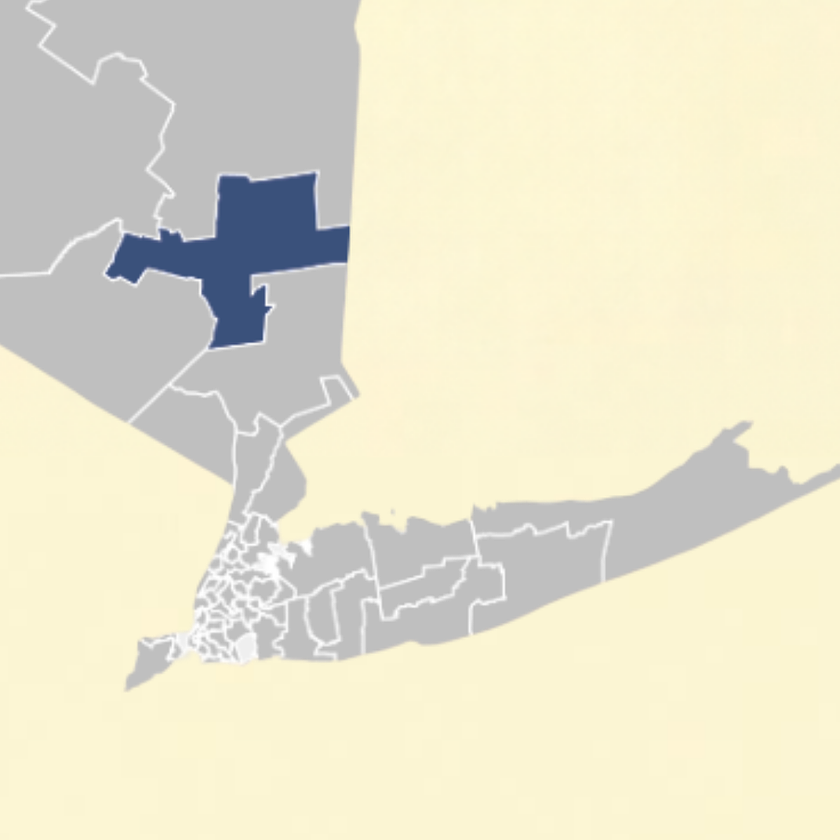
State Senate, District 39
- Please briefly describe your background and why you are running for this office.
- I grew up in India, and at many points during my childhood, we lacked access to reliable electricity, potable water, or both. I learned early not to take for granted the fragile natural and social systems that provide the basis for healthy, flourishing lives.
During the pandemic, I began to feel that I needed to be doing much more than I was doing to confront climate change – so that twenty years from now, I can look my son in the eye and tell him I did what I could. I quit my job as Director of Community-Engaged Learning at Vassar College, ran for Dutchess County Legislature with the support of Climate Cabinet, and won, flipping a Republican-held seat in a purple district. - How are you differentiated from your opponent(s)? What does your path to victory look like?
- My opponent, Rob Rolison, is a former law enforcement officer, son of a former state senator, and is part of the establishment in Dutchess County. He has served two terms as the senator for the 39th district.
My opponent presents himself as a “moderate” Republican but he votes with his party 96% of the time. I am a proud progressive democrat with a record of working across the line and delivering even when in the minority caucus.
My opponent won the last election (in 2024) by 2000 votes. This race will be won by reducing his margin of victory in places that he won in 2024 and increasing my margin of victory in areas where the previous Democratic candidate won. I believe I will be able to do so because of the following reasons:
Early name recognition from a Democratic primary. I won a 3-way Democratic primary with 62.1% of the vote.
A record of working across the aisle to get stuff done.
A winning message that centers current affordability concerns and addresses important issues for the future including climate change, AI, and democracy.
Broad coalition of partners, including labor, progressive groups, democratic committees, local electeds, and social justice non-profits.
A strong field program fully in coordination with up- and down-ballot candidates and the NY Dems’ CD-17 and CD-18 Coordinated Campaigns.
Strong digital and mail program, as well as robust relational organizing. - — DEMOCRACY AND DELIVERY —
- Respecting the Democratic Process. We believe in a democracy that delivers, and that includes maintaining a commitment to democratic norms. New York should not take steps to limit access to the ballot. The legitimacy of free and fair elections should not be subverted, and their results should not be challenged after being audited and/or upheld in the courts.
- Agree
- Increasing Focus on Outcomes: New York should revisit and update outdated rules on hiring, procurement, and approvals for infrastructure changes to ensure our protocols are aligned with our values—and should focus on actual outcomes achieved rather than money spent.
- I generally agree with the need to make the hiring process more flexible. However, I want to ensure that labor protections and rights are maintained and not compromised in the process.
- Civil Service Reform: New York should make it easier for the government to hire the staff they need by making exams more job-relevant, allowing work experience to count instead of degrees, and enabling temporary appointments. (See agenda item #2)
- I generally agree with the need to make the hiring process more flexible. However, I want to ensure that labor protections and rights are maintained and not compromised in the process.
- Capital Project Procurement Reform: New York State should give NYC more procurement flexibility (such as expanded challenge-based procurement and "other transaction authority" style contracting) in order to speed up the delivery of capital projects. (See agenda item #4)
- I generally agree but want enforcable labor standards, require apprenticeships, PLSAs, and local hires.
- City Charter Reform: New York City voters should approve “COGE” ballot questions 1-4 to accelerate nonprofit contracts, building permits, outdoor dining application review, and bike lane creation.
- As a State Senator representing a district outside New York City, I would defer to New York City voters on questions concerning their local elections and governance. My focus is on representing my constituents and addressing issues within the scope of state government.
- — HOUSING AND HOMELESSNESS —
- Expanding Housing: Addressing the housing affordability crisis requires increasing production of all kinds of housing, including market-rate units, across all neighborhoods and municipalities.
- Agree
- Transit Oriented Development: New York should allow for more housing to be built near existing transit stations including near commuter rail stations, even if that requires changing zoning. (See agenda items #8 and #9)
- Agree
- Property Tax Reform: New York state should reform the property tax system to be fairer, especially for renters; easier to understand; and more progressive. (See agenda item #11)
- Agree
- Homelessness/Expedited permanent supportive housing: Addressing the homelessness crisis requires a housing-first solution such as expedited permanent supportive housing for those in need, because shelters are not a permanent solution. (See agenda item #12)
- Agree
- Build Code Reform: New York, at the city and state level, should embrace building code and licensing reforms (e.g., smaller elevator size requirements, modular construction, mass timber) that make it cheaper to build housing while maintaining safety. (See agenda items #15-17)
- Agree
— PUBLIC TRANSIT AND THE PUBLIC REALM —
- Reducing Car Dependency: New York should aspire to reduce the number of cars on the road and vehicle miles traveled, by expanding access to high-quality, affordable, and safe public transit and micro-mobility.
- Agree
- Transit Cost Containment: New York should act in a coordinated fashion to reduce the cost of building new transit projects, including reducing the size of stations and allowing the temporary disruption of street traffic to more quickly complete projects. (See agenda item #19)
- Agree
- Busway Expansion: New York City should: 1) expand the number of busways (routes where private cars are banned); and 2) eventually pursue bus rapid transit lines to increase bus speeds throughout the city. (See agenda item #20)
- I do support this, but as a State Senator representing a district outside New York City, I would defer to New York City voters on questions concerning their local elections and governance. My focus is on representing my constituents and addressing issues within the scope of state government.
- Parking: New York City should charge more for parking and reduce or eliminate free street parking, and should eliminate parking mandates for new homes. (See agenda items #18 and #26)
- I do support this, but as a State Senator representing a district outside New York City, I would defer to New York City voters on questions concerning their local elections and governance. My focus is on representing my constituents and addressing issues within the scope of state government.
- — CLEAN ENERGY AND RESILIENCY —
- Abundant Clean Energy: New York should prioritize private and public sector construction of new renewable energy, grid electrification and transmission upgrades, and resiliency infrastructure to meet our climate goals and adapt our infrastructure for the future.
- Agree
- Solar Energy: New York State should preempt local regulations that effectively ban solar projects by establishing a ceiling on restrictions and should streamline solar permitting by adopting automated systems in order to enable more solar energy. (See agenda items #32 & #33)
- Agree
- New Energy Development: Beyond solar, New York should expand its nuclear energy capacity—including by building new reactors and extending the life of existing plants—and advance geothermal projects in order to hit the goal of 100% zero-emission electricity generation by 2040. (See agenda items #39 & #40)
- I support advanced geothermal projects (insofar as new technology makes it economical in New York, where hot rocks are very deep!), and I support keeping existing nuclear plants operating. In the US, new nuclear construction has a track record of coming in far behind schedule and far over budget. For that reason, I do not favor putting tax-payers or rate-payers on the hook for the costs of new nuclear. Instead, I favor investing in solar, wind, and batteries, which are both faster to deploy and far less expensive. In New York State, we are fortunate that hydropower and existing nuclear power provide sufficient “clean, firm” power to balance variable renewals, even without building new nuclear power.
- Resiliency Authority: The State should create and empower a public authority to address New York's resilience needs led by a Chief Resilience Officer and guided by a collaborative statewide resilience plan that prioritizes protecting socially vulnerable communities. (See agenda item #37)
- Agree
- — RECORD AND PRIORITIES —
- Abundance Examples from Your Work: Please describe a specific example from your record (legislative, professional, or community work) where you championed a project or policy that is aligned with our agenda. What obstacles did you overcome, and what was the outcome?
- As a county legislator, I have championed expanding public transit – and in particular, making it more frequent and reliable, which is key to increasing ridership.
I am a strong supporter of parking reform, of reducing exclusionary zoning to allow for more missing-middle housing, especially around transit, and of reducing obstacles to the buildout of renewable power, batteries, and transmission lines – as well as local permitting and utility interconnection obstacles that add to the soft-costs of rooftop solar. Many of these issues are governed either at the municipal level or the state level, so I have not had direct impact on them as a county legislator. However, these are causes I would champion in the state.
As a resident, I have joined my Town Board in successfully advocating for and passing inclusionary zoning and Good Cause Eviction. I also support a raft of specific laws around energy policy, such as the ASAP Act (S6570A) and the GREAT Act (S9500) to reform utilities, accelerate the build-out of wind and solar, and require utilities to employ tools like Virtual Power Plants to better utilize our grid and lower costs for ratepayers.
I am a supporter of the Hudson Valley Power Authority Act, which would replace our for-profit, investor owned utility with a new publicly owned utility that would have decarbonization as a primary, statutory goal. Because investor-owned utilities earn a guaranteed rate of return only on investments in capital equipment (polls, wires, substations), they are incentivized to resist technologies, such as grid-scale batteries and Virtual Power Plants, that make it possible and affordable to transition rapidly to zero-carbon power. - Legislative Priorities: If elected (or re-elected), what are your top three priorities? Please be specific about the policies you would advance and what you hope to achieve.
- · Pass policies to accelerate the buildout of renewable energy (and related technologies, such as transmission, batteries, and virtual power plants) in New York State
· Tackle the housing crisis by making it easier to build in New York State – especially missing-middle housing which can help to create walkable, bikeable, transit-friendly neighborhoods.
· Pass the New York Health Act, to deliver universal health care in New York State, and lower overall system costs.