Abundance New York 2026 State Legislative Candidate Questionnaire
Joseph Rand
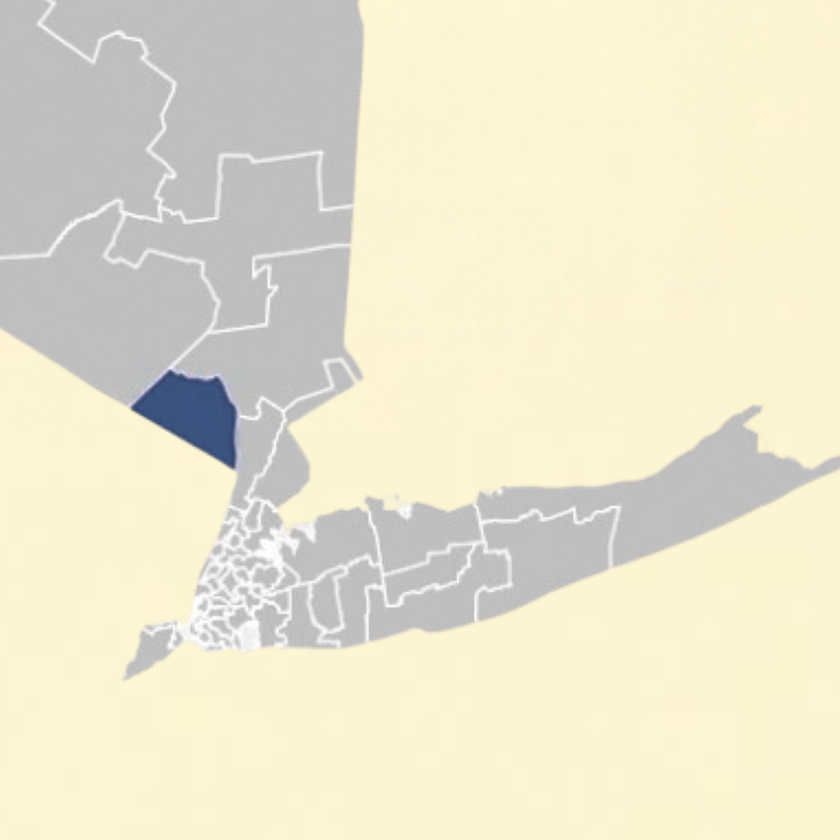
State Senate, District 38
- Please briefly describe your background and why you are running for this office.
- I am the Mayor of Nyack and a business executive who spent more than 25 years helping build and manage a family-owned real estate company employing hundreds of people and working with more than 1,000 independent professionals.
As Mayor, I have focused on making government work: securing over $7.5M of dollars for downtown and waterfront revitalization and infrastructure while investing in our water system, improving public safety, encouraging new housing and businesses, and maintaining fiscal discipline.
One of the reasons I am running for the State Senate is because New York has enormous strengths but has become too expensive and too difficult to build in. We need more housing, more clean energy, better infrastructure, and a government capable of delivering them faster and more affordably.
We can protect workers, communities, and the environment while making it faster and less expensive to create the housing, clean energy, infrastructure, and economic opportunity New Yorkers need. Government should not simply regulate scarcity; it should help create abundance. I want to bring the practical, results-oriented approach I have used in business and local government to Albany: protecting our values while removing unnecessary barriers to growth, opportunity, and affordability. - How are you differentiated from your opponent(s)? What does your path to victory look like?
- I get things done. I have spent more than 25 years running a business and the last several years in local government, where success is measured by whether you actually achieve objectives and create value. As Mayor, I have secured over $7.5M in infrastructure and revitalization funding, including the highliy competitive $4.5M Downtown Revitalization Grant. At the same time, I have encouraged new housing and businesses, invested in our water system, improved public safety, and maintained fiscal discipline.
I bring a fundamentally pro-growth approach, paritcularly for housing. I have been studying the housing market for 25 years as the owner of the largest brokerage company in the history of Rockland County, and I can say with absolute certainty that we need to build more. The average sales price right now in Rockland is over $900,000, almost double what it was in 2019. People can only afford to live here if they bought their home more than 10 years ago; but their kids can't.
I think of "Affordable Housing" in two ways: Capital-A and lower-case-a. Capital A is housing that is subsiized in some way by the government: vouchers, developer incentives, community housing, and the like. We need more of that, absolutely. But we also need lower-case-a affordable housing: housing that is more affordable because government gets out of the way and encourages/incentivizes developers to build entry-level housing rather than more luxury homes. We need to grow out way out of this housing shortage.
As for my path to victor, I am on my way. I outraised my opponent through July, including doubling his contributions from Rockland donors. I also more than doubled his petitions to get on the ballot, showing my volunteer enthusisaum. I'm going to win by combining strong Democratic turnout with support from independents and moderate voters who are looking for practical leadership rather than partisan politics. Rockland is highly competitive, and voters here regularly split their tickets. I can win by offering a clear alternative: socially progressive, fiscally disciplined, pro-growth, and focused relentlessly on affordability and results.
— DEMOCRACY AND DELIVERY —
- Respecting the Democratic Process. We believe in a democracy that delivers, and that includes maintaining a commitment to democratic norms. New York should not take steps to limit access to the ballot. The legitimacy of free and fair elections should not be subverted, and their results should not be challenged after being audited and/or upheld in the courts.
- Agree
- Increasing Focus on Outcomes: New York should revisit and update outdated rules on hiring, procurement, and approvals for infrastructure changes to ensure our protocols are aligned with our values—and should focus on actual outcomes achieved rather than money spent.
- Agree
- Civil Service Reform: New York should make it easier for the government to hire the staff they need by making exams more job-relevant, allowing work experience to count instead of degrees, and enabling temporary appointments. (See agenda item #2)
- Agree
- Capital Project Procurement Reform: New York State should give NYC more procurement flexibility (such as expanded challenge-based procurement and "other transaction authority" style contracting) in order to speed up the delivery of capital projects.(See agenda item #4)
- Agree
- City Charter Reform: New York City voters should approve “COGE” ballot questions 1-4 to accelerate nonprofit contracts, building permits, outdoor dining application review, and bike lane creation.
- Agree
- Feel free to share any additional context on your answers for this section below. (2)
- I absolutely support the concept, and would love to see this expanded beyond NYC.
— HOUSING AND HOMELESSNESS —
- Expanding Housing: Addressing the housing affordability crisis requires increasing production of all kinds of housing, including market-rate units, across all neighborhoods and municipalities.
- Agree
- Transit Oriented Development: New York should allow for more housing to be built near existing transit stations including near commuter rail stations, even if that requires changing zoning. (See agenda items #8 and #9)
- Agree
- Property Tax Reform: New York state should reform the property tax system to be fairer, especially for renters; easier to understand; and more progressive. (See agenda item #11)
- Agree
- Homelessness/Expedited permanent supportive housing: Addressing the homelessness crisis requires a housing-first solution such as expedited permanent supportive housing for those in need, because shelters are not a permanent solution. (See agenda item #12)
- Agree
- Build Code Reform: New York, at the city and state level, should embrace building code and licensing reforms (e.g., smaller elevator size requirements, modular construction, mass timber) that make it cheaper to build housing while maintaining safety. (See agenda items #15-17)
- Agree
- Feel free to share any additional context on your answers for this section below.
- You haven't asked about it (yet), but I lobbied up on Albany to support the SEQRA reforms proposed by Governor Hochul and ultimately passed by the legislature.
— PUBLIC TRANSIT AND THE PUBLIC REALM —
- Reducing Car Dependency: New York should aspire to reduce the number of cars on the road and vehicle miles traveled, by expanding access to high-quality, affordable, and safe public transit and micro-mobility.
- Agree
- Transit Cost Containment: New York should act in a coordinated fashion to reduce the cost of building new transit projects, including reducing the size of stations and allowing the temporary disruption of street traffic to more quickly complete projects. (See agenda item #19)
- Agree
- Busway Expansion: New York City should: 1) expand the number of busways (routes where private cars are banned); and 2) eventually pursue bus rapid transit lines to increase bus speeds throughout the city. (See agenda item #20)
- Agree
- Parking: New York City should charge more for parking and reduce or eliminate free street parking, and should eliminate parking mandates for new homes. (See agenda items #18 and #26)
- Agree
- Feel free to share any additional context on your answers for this section below. (1)
- Totally agree with all of this. Couple of quick things:
1. Buses
I had an idea for an intra-village shuttle system, got $50K from Rockland County to by a six-person Gem Car, and am about to launch a point-to-point system for residents of Nyack to go from anyplace in the Village to any other place for free, partially paid for by advertising on th shuttle and on the Circuit app that will power the shuttle. That's going to happen soon, a model for villages throughout Rockland for last-mile transportation. More details here:
https://www.nyack.gov/departments/Administrator/hoppy-shuttle
2. Parking
I get yelled at all the time as Mayor of Nyack because we charge (a minimal amount!!!!) for parking. If you want to see my position on parking, in a rant I provided to the great Lewis Black for an event in Nyack, here's a video you might enjoy: https://www.facebook.com/share/p/1N9zedmMqY/
— CLEAN ENERGY AND RESILIENCY —
- Abundant Clean Energy: New York should prioritize private and public sector construction of new renewable energy, grid electrification and transmission upgrades, and resiliency infrastructure to meet our climate goals and adapt our infrastructure for the future.
- Agree
- Solar Energy: New York State should preempt local regulations that effectively ban solar projects by establishing a ceiling on restrictions and should streamline solar permitting by adopting automated systems in order to enable more solar energy. (See agenda items #32 & #33)
- Agree
- New Energy Development: Beyond solar, New York should expand its nuclear energy capacity—including by building new reactors and extending the life of existing plants—and advance geothermal projects in order to hit the goal of 100% zero-emission electricity generation by 2040. (See agenda items #39 & #40)
- I am ambivalent about nuclear. I don't want Indian Point reopened, but I'm persuadable about the need for nuclear in places wehre it's not so environmentally fraught, particularly if it's new and modern design (rather than 60-year-old tech).
- Resiliency Authority: The State should create and empower a public authority to address New York's resilience needs led by a Chief Resilience Officer and guided by a collaborative statewide resilience plan that prioritizes protecting socially vulnerable communities. (See agenda item #37)
- Agree
- — RECORD AND PRIORITIES —
- Abundance Examples from Your Work: Please describe a specific example from your record (legislative, professional, or community work) where you championed a project or policy that is aligned with our agenda. What obstacles did you overcome, and what was the outcome?
- The Nyack Hoppy Shuttle I referenced earlier is a good example of abundance thinking because we identified a practical community need and focused on creating a new solution rather than simply managing an existing limitation. Hoppy is an electric downtown shuttle designed to make it easier for residents and visitors to move around Nyack, connect neighborhoods with businesses and parking, and reduce dependence on cars for short trips. It demonstrates how local government can improve mobility, support downtown businesses, and advance environmental goals at the same time. Abundance means giving people more useful choices, and Hoppy creates a new transportation option that didn't exist before.
- Legislative Priorities: If elected (or re-elected), what are your top three priorities? Please be specific about the policies you would advance and what you hope to achieve.
- 1. Build More Housing. New York cannot subsidize its way out of a housing shortage; we have to build more homes. I would support greater density in appropriate downtown and transit-oriented locations, streamlined permitting and environmental review, incentives for municipalities to increase housing production, and policies that reduce the cost and time required to build. We need both capital-A Affordable Housing and more market-rate housing to increase overall supply and bring costs down.
2. Produce More Affordable, Clean Energy. New York needs substantially more electricity to meet our climate goals while accommodating economic growth. I would accelerate clean generation, transmission, storage, and grid modernization; streamline permitting for responsible energy projects; and encourage distributed energy. Our objective should be abundant, reliable, increasingly emissions-free energy at prices families and businesses can afford.
3. Make Government Better at Building Things. New York takes too long and spends too much to deliver infrastructure. I would pursue permitting, procurement, and environmental-review reforms that preserve important protections while shortening unnecessary delays; modernize state and local government technology; and hold agencies accountable for project costs and timelines. Whether we are building housing, transit, water infrastructure, or clean energy, progressive government ultimately has to prove that it can deliver.