
Abundance New York 2026 Congressional Candidate Questionnaire
Chris Diep
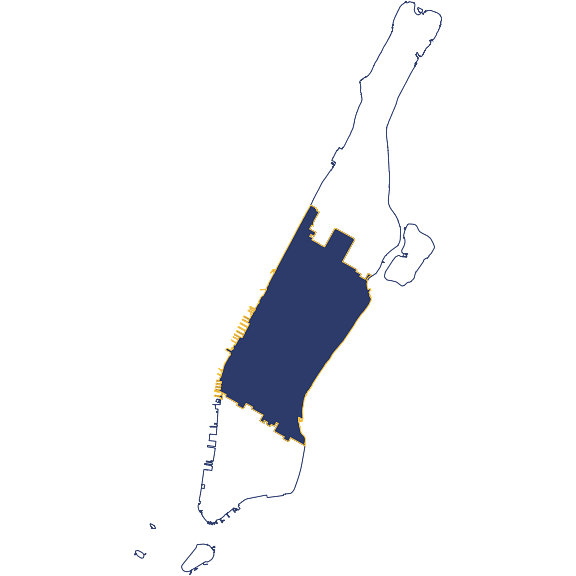
Congressional District NY-12
Background
Please briefly describe your background and why you are running for this office.
I am a son of Vietnamese refugees and a software engineer. I'm running for this office because I saw my dad achieve the American Dream and see it slipping away for more and more people. Growing up, my dad was my hero. He kept working hard and moving on to better and better jobs. He worked at a donut shop, at the Marriott Hotel, and so on. When he took night classes to become a stationary engineer, I gladly helped him put in his answers on the computer. He was usually exhausted from work. In my own life, I took a risk and moved to New York with only a suitcase. I went to Flatiron School and became a software engineer. Nowadays, I see more and more layoffs and jobs harder to come by. To help people achieve the American Dream, we have to invest in people. For instance, we have to build more housing and more public transit. We have to produce cleaner energy to make this happen.
How are you differentiated from your opponent(s)? What does your path to victory look like in your district?
I have lived experience as part of an immigrant family achieving the American Dream in my childhood. I am a software engineer able to adapt to the impact of AI on the economy. I am an outsider who can think outside the box. My path to victory in my district is to build name recognition and reach out to the undecided voters. In February polls, 30% of likely voters are undecided and make it an open race. The path to victory requires fundraising and getting endorsements for the grassroots campaign.
Government Delivery Reform
NEPA Reform: Congress should reform the National Environmental Policy Act (NEPA) to reduce the time and scope of federal environmental review for housing, transit, renewable energy, and resilience projects. NEPA delays affect federally funded projects in New York, adding years and significant costs to critical infrastructure.
Agree
Capital Project Procurement Reform: Congress should give federal agencies and their state and local grantees more procurement flexibility—such as expanded other transaction authority and performance-based contracting—to speed up delivery of federally funded capital projects. This should include examining Buy America requirements and federal cost-sharing rules that inflate project costs.
Agree
Additional context
(No response)
Housing
Expanding Housing: Addressing the housing affordability crisis requires increasing production of all kinds of housing, including market-rate units. Congress should increase federal support for housing production through funding and regulatory changes, including by tying federal transportation, infrastructure, and community development funding to pro-supply local policies such as zoning and permitting reform.
Agree
Homelessness: Congress should increase federal funding for Housing First approaches, including permanent supportive housing, as the primary strategy for addressing homelessness.
I like to address the root causes on why an individual might not have housing. My latest understanding of Housing First is that it did not work in Utah so I would have to look into that.
Transit-Oriented Development: Congress should incentivize transit-oriented development by conditioning federal transit funding on local zoning changes that allow more housing near transit stations.
Agree
Build Code Reform: Congress should support research, funding, financing, and model codes that encourage cheaper construction methods (e.g., modular construction, mass timber) while maintaining safety.
Agree
Repeal the Faircloth Amendment: Congress should repeal the Faircloth Amendment, which prohibits the use of federal funds to build new public housing units beyond the number that existed in 1999, to allow for the construction of new public housing.
Agree
Additional context
(No response)
Transit
Transit Cost Containment: Congress should act to reduce the cost of federally funded transit projects, including by reforming FTA New Starts and Capital Investment Grant requirements, streamlining federal review, and encouraging cost-containment practices as a condition of federal funding.
Agree
Bus Transit Investment: Congress should leverage its funding for bus transit to encourage the creation of busways and bus rapid transit where appropriate to increase the speed of buses and the efficiency of federal investments, including through programs like the FTA's Capital Investment Grants and Bus and Bus Facilities program.
Agree
Automated Camera Enforcement: Congress should remove or oppose federal restrictions that limit state and local use of automated traffic enforcement—such as red light cameras, speed cameras, and bike lane cameras—and should allow federal highway safety funds to support automated enforcement expansion.
Agree
Parking: New York City should charge more for parking and reduce or eliminate free street parking.
Disagree
Additional context
(No response)
Clean Energy & Climate Resilience
Solar Energy: New York State should preempt local regulations that effectively ban solar projects by establishing a ceiling on restrictions and should streamline solar permitting by adopting automated systems in order to enable more solar energy.
Agree
Nuclear Energy: Congress should support expanding U.S. nuclear energy capacity by funding new reactor designs, streamlining NRC licensing, and extending the operating licenses of existing plants in order to hit the goal of 100% zero-emission electricity generation by 2040.
Agree
Geothermal Energy: Congress should support the expansion of geothermal energy development through federal research funding, streamlined permitting, and incentives for deployment, including in dense urban areas like New York.
Agree
Transmission Co-Location: Congress should support legislation that prioritizes existing highway, railroad, and utility rights-of-way for the siting of new electricity transmission lines, reducing permitting delays and landowner conflicts while accelerating the buildout of transmission capacity needed to deliver clean energy.
Agree
Climate Resilience Investments: Congress should increase federal investment in climate resilience infrastructure, including coastal defenses, stormwater management, and cooling infrastructure, with priority given to socially vulnerable communities.
Agree
Buyout Reform: Congress should reform federal disaster buyout programs—including those administered through FEMA and HUD—to accelerate the relocation of families out of high-risk flood zones, with streamlined environmental review, standing funding, and expanded eligibility for renters.
Agree
Additional context
(No response)
Candidate Statement
Abundance Examples from Your Work: Please describe a specific example from your record (legislative, professional, or community work) where you championed a project or policy that is aligned with our agenda. What obstacles did you overcome, and what was the outcome?
My community work involves coaching kids in soccer and helping them be respectful of the environment.
Legislative Priorities: If elected (or re-elected) to Congress, what are your top three legislative priorities? Please be specific about the policies you would advance and what you hope to achieve.
My priorities include building high speed rail, supporting more clean energy projects especially nuclear, and limiting the amount of housing Wall Street firms can buy.