Abundance New York 2026 State Legislative Candidate Questionnaire
Brandon Castro
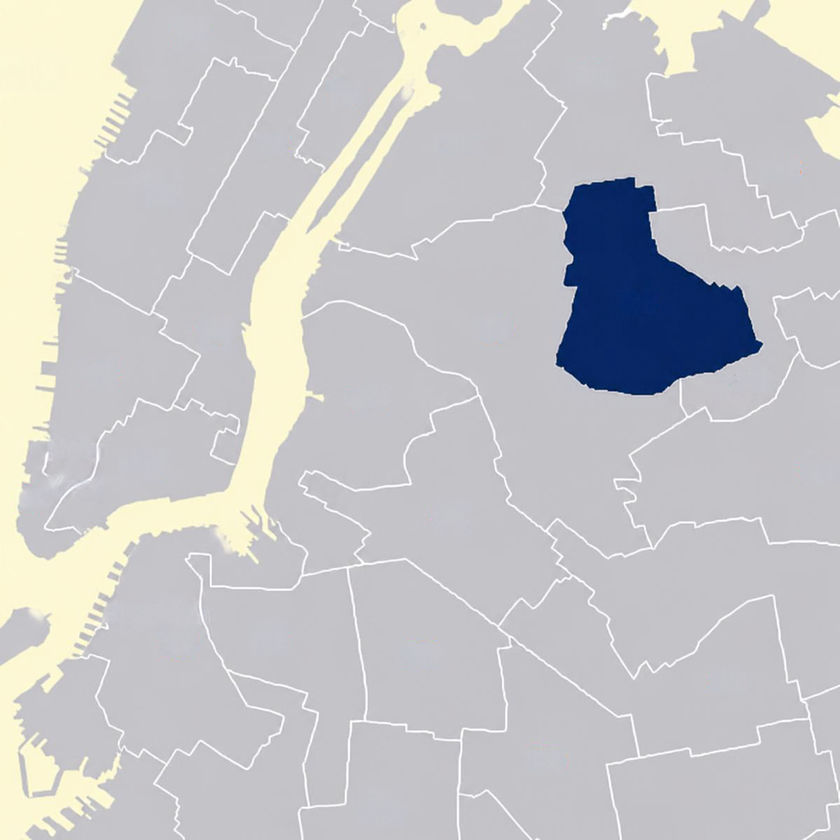
State Assembly, District 30
- Please briefly describe your background and why you are running for this office.
- I’m a lifelong Queens resident, born and raised in Woodside and the son of Ecuadorian immigrants. I attended New York City public schools, graduated from Queens College, and have worked in community outreach and public service, including with the NYC Department of Small Business Services. I have also served in student government and spent years working directly with residents, small businesses, and community organizations across Queens.
I’m running for State Assembly because I believe New York needs a new generation of practical, independent leadership focused on making it easier for people to build a life here. Too many New Yorkers are being squeezed by rising housing costs, aging infrastructure, taxes, and a government that too often makes it harder to build, grow a business, or get things done. I want to bring a results-oriented approach to Albany, supporting real affordable housing and economic opportunity, investing in transit and infrastructure, strengthening our schools and workforce, and making government more accountable to the people it serves. - How are you differentiated from your opponent(s)? What does your path to victory look like?
- I offer voters a fundamentally different kind of leadership. My opponent comes from the New York political party machine, while I have built my campaign as an independent, pragmatic voice for the district. I am part of a new generation of leadership focused on solving problems rather than defending the status quo, with a particular emphasis on affordability, education, infrastructure, public safety, and economic opportunity.
On education, I believe New York should expand opportunity rather than lower standards. I support expanding vocational education, CTE, apprenticeships, trade programs, and career development so that every student can graduate with a real pathway to college, a skilled trade, or a good-paying career.
I also believe growth has to be matched by infrastructure. Our neighborhoods are already dealing with faulty sewers, repeated flooding, and other capacity problems. I support building more housing and creating more economic opportunity, but Albany and the City must invest aggressively in the infrastructure that makes that growth sustainable, including sewer and stormwater upgrades, transportation, public space, and resilient infrastructure. We should be able to build more while also making sure existing communities are not left with the consequences of neglected infrastructure.
Public safety is another major point of distinction. New Yorkers should be able to feel safe on their streets, in the subway, in their businesses, and in their homes. I support maintaining adequate police staffing, improving training and accountability, strengthening neighborhood-based policing, and making sure repeat quality-of-life and public-safety concerns are actually addressed. Safe neighborhoods are also essential to economic growth, strong schools, and a good quality of life.
My path to victory is building a broad coalition that goes well beyond traditional party lines. In 2024, I earned more than 12,000 votes and nearly 40% of the vote against an incumbent Assemblymember. This year is an open-seat election, and the Democratic primary was decided by only seven votes, demonstrating a divided electorate and a genuine opportunity for a competitive general election.
We are focused on retaining and expanding our 2024 coalition while winning independents, moderate Democrats, working-class voters, small-business owners, homeowners, renters, parents, and younger voters who are frustrated with the cost of living and want practical solutions. In a district where many voters care more about results than partisan labels, I believe a locally rooted, cross-partisan campaign centered on affordability, stronger schools, safer neighborhoods, better infrastructure, and competent government can win.
— DEMOCRACY AND DELIVERY —
- Respecting the Democratic Process. We believe in a democracy that delivers, and that includes maintaining a commitment to democratic norms. New York should not take steps to limit access to the ballot. The legitimacy of free and fair elections should not be subverted, and their results should not be challenged after being audited and/or upheld in the courts.
- Agree
- Increasing Focus on Outcomes: New York should revisit and update outdated rules on hiring, procurement, and approvals for infrastructure changes to ensure our protocols are aligned with our values—and should focus on actual outcomes achieved rather than money spent.
- Agree
- Civil Service Reform: New York should make it easier for the government to hire the staff they need by making exams more job-relevant, allowing work experience to count instead of degrees, and enabling temporary appointments. (See agenda item #2)
- Agree
- Capital Project Procurement Reform: New York State should give NYC more procurement flexibility (such as expanded challenge-based procurement and "other transaction authority" style contracting) in order to speed up the delivery of capital projects.(See agenda item #4)
- Agree
- City Charter Reform: New York City voters should approve “COGE” ballot questions 1-4 to accelerate nonprofit contracts, building permits, outdoor dining application review, and bike lane creation.
- I support the goals of Questions 1, 2, and 4 to streamline contracting, permitting, and application reviews. However, I have concerns with Question 3. I support safer streets and better transportation infrastructure, but major street redesigns should include meaningful community input and careful consideration of traffic flow, emergency vehicle access, parking and loading needs, and the specific conditions of each neighborhood. Speeding up government should not mean bypassing the communities most directly affected by these changes.
- Feel free to share any additional context on your answers for this section below. (2)
- Across these questions, my guiding principle is that government should be able to act faster, hire effectively, build necessary infrastructure, and deliver measurable results while remaining transparent and accountable to the public. I support modernizing outdated civil service, procurement, permitting, and contracting rules when those reforms make government more effective, expand access to opportunity, and help important projects move forward.
I also believe reform should preserve democratic legitimacy, merit-based standards, fiscal accountability, and meaningful public input. Faster government should not mean weaker oversight or bypassing communities. That is why I support the broader goals of the COGE reforms, but have concerns with Question 3 where expedited street redesigns could reduce meaningful consideration of neighborhood-specific impacts such as traffic flow, emergency access, parking, loading, and local conditions.
Overall, I favor a government that is judged by what it actually accomplishes: safer neighborhoods, stronger infrastructure, faster project delivery, better public services, more opportunity, and responsible use of taxpayer dollars.
— HOUSING AND HOMELESSNESS —
- Expanding Housing: Addressing the housing affordability crisis requires increasing production of all kinds of housing, including market-rate units, across all neighborhoods and municipalities.
- Agree
- Transit Oriented Development: New York should allow for more housing to be built near existing transit stations including near commuter rail stations, even if that requires changing zoning. (See agenda items #8 and #9)
- Agree
- Property Tax Reform: New York state should reform the property tax system to be fairer, especially for renters; easier to understand; and more progressive. (See agenda item #11)
- You can support making New York’s property tax system fairer, simpler, and less burdensome for renters without endorsing reforms that could simply shift higher taxes onto homeowners or small landlords.
- Homelessness/Expedited permanent supportive housing: Addressing the homelessness crisis requires a housing-first solution such as expedited permanent supportive housing for those in need, because shelters are not a permanent solution. (See agenda item #12)
- Agree
- Build Code Reform: New York, at the city and state level, should embrace building code and licensing reforms (e.g., smaller elevator size requirements, modular construction, mass timber) that make it cheaper to build housing while maintaining safety. (See agenda items #15-17)
- Agree
- Feel free to share any additional context on your answers for this section below.
- New York needs significantly more housing of all types, including market-rate, affordable, workforce, senior, and supportive housing. I support increasing production across communities and allowing more housing near existing transit, while also making the infrastructure investments necessary to support that growth. In Queens especially, new development must be accompanied by upgrades to sewers, stormwater systems, transit, schools, utilities, public safety, and other neighborhood infrastructure.
I also support reforms that reduce unnecessary construction costs and regulatory barriers while maintaining strong safety standards, including modernization of building codes, permitting, and construction methods.
On homelessness, shelters cannot be a permanent solution. I support moving people more quickly into permanent supportive housing, paired with appropriate mental-health services, substance-use treatment where needed, case management, and measures that protect both residents and surrounding communities.
I support making the property tax system fairer, simpler, and more transparent, particularly for renters. However, reform should not simply shift a greater tax burden onto homeowners or small property owners, nor should it unintentionally increase rents by driving up housing operating costs. My broader goal is to increase housing supply and ensure that growth improves rather than overwhelms the communities where it occurs.
— PUBLIC TRANSIT AND THE PUBLIC REALM —
- Reducing Car Dependency: New York should aspire to reduce the number of cars on the road and vehicle miles traveled, by expanding access to high-quality, affordable, and safe public transit and micro-mobility.
- New Yorkers should have much better alternatives to driving through reliable transit, improved bus service, safer streets, and appropriate micromobility, while recognizing that many outer-borough residents, seniors, families, workers, and small businesses still depend on automobiles.
- Transit Cost Containment: New York should act in a coordinated fashion to reduce the cost of building new transit projects, including reducing the size of stations and allowing the temporary disruption of street traffic to more quickly complete projects. (See agenda item #19)
- I support aggressive transit cost containment and faster project delivery, including right-sizing stations and modernizing construction practices. Temporary street disruption can be justified when it significantly reduces costs and construction timelines, but it should be carefully managed to protect emergency access, local businesses, residents, and overall neighborhood mobility.
- Busway Expansion: New York City should: 1) expand the number of busways (routes where private cars are banned); and 2) eventually pursue bus rapid transit lines to increase bus speeds throughout the city. (See agenda item #20)
- I support significantly improving bus speed and reliability, including bus rapid transit and targeted bus-priority corridors, but I believe full busways should be evaluated case-by-case based on neighborhood conditions, traffic impacts, emergency access, and local transportation needs.
- Parking: New York City should charge more for parking and reduce or eliminate free street parking, and should eliminate parking mandates for new homes. (See agenda items #18 and #26)
- Disagree
- Feel free to share any additional context on your answers for this section below. (1)
- I support greater flexibility around parking requirements for new housing, particularly in transit-rich areas, so that unnecessary mandates do not increase construction costs or prevent new housing from being built. However, I do not support a blanket policy of eliminating free street parking or substantially increasing parking costs across the city. Transportation needs vary significantly by neighborhood, and many outer-borough residents, seniors, families, workers, and small businesses continue to rely on automobiles. My district has a considerable amount of homeowners, property owners, seniors, families, retirees, and other stakeholders. Parking policy should reflect local conditions while we continue expanding reliable public transit and giving New Yorkers more transportation choices.
- — CLEAN ENERGY AND RESILIENCY —
- Abundant Clean Energy: New York should prioritize private and public sector construction of new renewable energy, grid electrification and transmission upgrades, and resiliency infrastructure to meet our climate goals and adapt our infrastructure for the future.
- I support expanding renewable and zero-emission energy production, modernizing our grid and transmission system, and making major investments in resilience infrastructure. These investments should be pursued with equal attention to affordability, reliability, and energy security. I support an all-of-the-above clean-energy strategy, including renewable, nuclear, geothermal, and other zero-emission technologies, rather than imposing inflexible electrification mandates that could increase costs for New Yorkers.
- Solar Energy: New York State should preempt local regulations that effectively ban solar projects by establishing a ceiling on restrictions and should streamline solar permitting by adopting automated systems in order to enable more solar energy. (See agenda items #32 & #33)
- Agree
- New Energy Development: Beyond solar, New York should expand its nuclear energy capacity—including by building new reactors and extending the life of existing plants—and advance geothermal projects in order to hit the goal of 100% zero-emission electricity generation by 2040. (See agenda items #39 & #40)
- Agree
- Resiliency Authority: The State should create and empower a public authority to address New York's resilience needs led by a Chief Resilience Officer and guided by a collaborative statewide resilience plan that prioritizes protecting socially vulnerable communities. (See agenda item #37)
- I strongly support a coordinated statewide resilience strategy, including major investments in flood mitigation, stormwater and sewer infrastructure, coastal protection, and other measures that help vulnerable communities withstand extreme weather. My concern is with creating another public authority without clear accountability and measurable performance standards. I would support a Chief Resilience Officer and stronger statewide coordination if the structure is designed to streamline delivery, work closely with local communities, avoid duplicative bureaucracy, and be judged by whether projects are actually completed on time and produce meaningful results.
— RECORD AND PRIORITIES —
- Abundance Examples from Your Work: Please describe a specific example from your record (legislative, professional, or community work) where you championed a project or policy that is aligned with our agenda. What obstacles did you overcome, and what was the outcome?
- As a Community Liaison with the NYC Department of Small Business Services, I worked directly with small businesses and residents who were often trying to navigate complicated government programs, requirements, and resources. Too often, the obstacle was not a lack of available assistance, but a system that was difficult to understand and required people to know which agency, program, or office to approach.
My role was to help bridge that gap, bringing government resources directly into communities, connecting small businesses with available programs and opportunities, and helping people navigate bureaucracy rather than expecting them to figure it out on their own. The biggest obstacles were fragmented government processes, limited awareness of available services, and the disconnect that can exist between government programs and the people they are intended to serve.
That same philosophy has shaped my community advocacy, particularly around infrastructure and resiliency. I have spent significant time listening directly to residents about repeated flooding, aging sewer and stormwater systems, overdevelopment concerns, transportation needs, and other quality-of-life issues affecting our neighborhoods. I regularly attend town halls, civic association meetings, community events, and other local forums because I believe effective policy starts with deeply understanding how government decisions affect people at the neighborhood level.
I have advocated for stronger flood mitigation, sewer and stormwater upgrades, resilient infrastructure, and a more proactive government response when severe weather threatens our communities. These experiences have reinforced my belief that growth and housing production must be accompanied by the infrastructure necessary to sustain them, and that government should not wait until systems fail repeatedly before acting.
Across both my professional and community work, the lesson has been consistent: government should be judged by whether it actually delivers. That means reducing unnecessary administrative barriers, improving coordination between agencies, investing in infrastructure before problems become crises, and ensuring that residents have a meaningful voice in the decisions that affect their neighborhoods. My goal is not simply to advocate for more spending, but for better outcomes, safer and more resilient communities, stronger infrastructure, accessible government services, and projects that are actually completed. - Legislative Priorities: If elected (or re-elected), what are your top three priorities? Please be specific about the policies you would advance and what you hope to achieve.
- My top three legislative priorities would be:
1. Build the infrastructure and housing New York needs.
I would prioritize major investments in sewer and stormwater capacity, flood mitigation, transit, resilient infrastructure, and modernization of aging public systems. In Queens, repeated flooding and infrastructure limitations have shown that government cannot continue reacting only after problems occur. I support increasing housing production, including market-rate, affordable, workforce, senior, and supportive housing, particularly near existing transit, while ensuring that infrastructure keeps pace with growth. I would also support permitting, procurement, and building-code reforms that reduce unnecessary delays and construction costs while maintaining safety. I would advocate for projects such as QueensLink that make better use of existing transportation infrastructure and expand mobility without waiting decades for entirely new systems. My goal is to make New York capable of building more housing and infrastructure, completing projects faster, and creating communities that are prepared for future growth and extreme weather.
2. Expand education, skills, and pathways to good-paying careers.
New York needs to give young people more than one pathway to success. I would work to expand Career and Technical Education, vocational and trade programs, apprenticeships, career counseling, and partnerships between schools, unions, employers, and community colleges. I support maintaining rigorous academic and merit-based opportunities while also making skilled trades and technical careers a much larger part of our education system. I would also support stipends and other assistance for lower-income students participating in training and apprenticeship programs so that financial barriers do not prevent them from developing valuable skills. My goal is for every student to graduate with a realistic pathway to college, a skilled trade, entrepreneurship, or a good-paying career.
3. Make New York more affordable, safer, and more accountable.
Affordability is about more than any single tax or program. I would work to reduce unnecessary housing and construction costs, protect homeowners and small property owners from excessive tax burdens, support small businesses, and scrutinize state spending to ensure taxpayers are getting measurable results. At the same time, affordability and growth depend on safe communities. I support adequate police staffing, strong training and accountability, neighborhood-based policing, and addressing persistent quality-of-life and public-safety concerns. I would also push for greater transparency in state spending and stronger oversight of programs receiving taxpayer dollars. My goal is a New York where families can afford to stay, businesses can grow, neighborhoods are safe, and government is judged by what it actually delivers.