Abundance New York 2026 Congressional Candidate Questionnaire
Antonio Reynoso
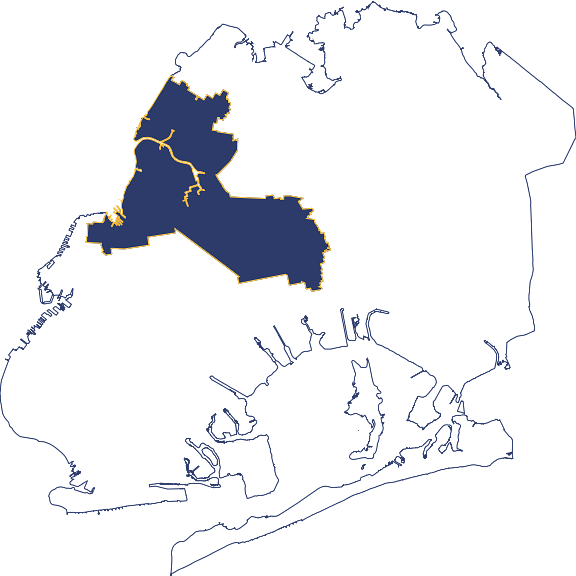
Congressional District NY-7
Background
Please briefly describe your background and why you are running for this office.
I’m running for Congress because this district shaped me and because Washington is failing the very communities that built it.
I was raised in Los Sures, the son of two Dominican immigrants, and I came up organizing with New Kings Democrats to challenge the old machine politics that held our neighborhoods back. Early on, I stood up to party boss Vito Lopez when too many people were willing to let corporate, corrupt Democrats win. I’ve always believed our communities deserve leaders who answer to the people, not political insiders.
This seat needs urgency and backbone right now. We need someone who will fight to abolish ICE, repeal the Faircloth Amendment so we can build public housing again, pass the PRO Act, and deliver Medicare for All - and who has the track record to prove they can actually get things done.
As a Council Member and now Borough President, I’ve taken on powerful interests, passing Commercial Waste Zones to protect sanitation workers, advancing maternal health equity, expanding immigrant legal services, and pushing for deeply affordable housing. I’ve built coalitions and delivered results.
I’m running to challenge corporate influence, invest in working families, and bring Brooklyn’s independent, fighting spirit to Washington. Corporate democrats often do as much harm as Republicans, and I refuse to be one of them.
I know this district because I am from this district and I’ve never been afraid to fight for it.
How are you differentiated from your opponent(s)? What does your path to victory look like in your district?
Our strength is rooted in my record of delivering progressive wins for New Yorkers for decades. While my opponents have similar progressive values to me, I have proven that I don't just write strongly worded letters, I get things done, even when I was told it would end my political career.
Our endorsements reflect this. In addition to having the support of my mentor, Rep. Velázquez, we have the Working Families Party endorsement and the largest labor coalition in the race, made up of 32BJ, DC 37, HTC, RWDSU, Teamsters 237, and Unite Here Local 100 (with hopefully many more to come). We have the backing of progressive champions across the city like Public Advocate Jumaane Williams, Councilmembers Hudson, Nurse, Krishnan, Guttierrez, and Restler, and BP Donovan Richards. as well as community groups with deep ties to the district like CUFFH Action, Make the Road Action, and NY Communities for Change.
We want to harness this grassroots power to build a strong field program so we can meet New Yorkers in every corner of this district.
Government Delivery Reform
NEPA Reform: Congress should reform the National Environmental Policy Act (NEPA) to reduce the time and scope of federal environmental review for housing, transit, renewable energy, and resilience projects. NEPA delays affect federally funded projects in New York, adding years and significant costs to critical infrastructure.
Agree
Capital Project Procurement Reform: Congress should give federal agencies and their state and local grantees more procurement flexibility—such as expanded other transaction authority and performance-based contracting—to speed up delivery of federally funded capital projects. This should include examining Buy America requirements and federal cost-sharing rules that inflate project costs.
Agree
Additional context
(No response)
Housing
Expanding Housing: Addressing the housing affordability crisis requires increasing production of all kinds of housing, including market-rate units. Congress should increase federal support for housing production through funding and regulatory changes, including by tying federal transportation, infrastructure, and community development funding to pro-supply local policies such as zoning and permitting reform.
Agree
Homelessness: Congress should increase federal funding for Housing First approaches, including permanent supportive housing, as the primary strategy for addressing homelessness.
Agree
Transit-Oriented Development: Congress should incentivize transit-oriented development by conditioning federal transit funding on local zoning changes that allow more housing near transit stations.
Agree
Build Code Reform: Congress should support research, funding, financing, and model codes that encourage cheaper construction methods (e.g., modular construction, mass timber) while maintaining safety.
Agree
Repeal the Faircloth Amendment: Congress should repeal the Faircloth Amendment, which prohibits the use of federal funds to build new public housing units beyond the number that existed in 1999, to allow for the construction of new public housing.
Agree
Additional context
(No response)
Transit
Transit Cost Containment: Congress should act to reduce the cost of federally funded transit projects, including by reforming FTA New Starts and Capital Investment Grant requirements, streamlining federal review, and encouraging cost-containment practices as a condition of federal funding.
Agree
Bus Transit Investment: Congress should leverage its funding for bus transit to encourage the creation of busways and bus rapid transit where appropriate to increase the speed of buses and the efficiency of federal investments, including through programs like the FTA's Capital Investment Grants and Bus and Bus Facilities program.
Agree
Automated Camera Enforcement: Congress should remove or oppose federal restrictions that limit state and local use of automated traffic enforcement—such as red light cameras, speed cameras, and bike lane cameras—and should allow federal highway safety funds to support automated enforcement expansion.
Agree
Parking: New York City should charge more for parking and reduce or eliminate free street parking.
Agree
Additional context
(No response)
Clean Energy & Climate Resilience
Solar Energy: New York State should preempt local regulations that effectively ban solar projects by establishing a ceiling on restrictions and should streamline solar permitting by adopting automated systems in order to enable more solar energy.
Agree
Nuclear Energy: Congress should support expanding U.S. nuclear energy capacity by funding new reactor designs, streamlining NRC licensing, and extending the operating licenses of existing plants in order to hit the goal of 100% zero-emission electricity generation by 2040.
At the federal level, I will support policies that rapidly scale renewable energy, modernize infrastructure, and invest in climate resilience. I believe we should be investing in proven, scalable renewable energy like wind, solar, and geothermal, and focusing on energy efficiency improvements before turning to nuclear given the high costs and danger of creating long-term waste.
Geothermal Energy: Congress should support the expansion of geothermal energy development through federal research funding, streamlined permitting, and incentives for deployment, including in dense urban areas like New York.
Agree
Transmission Co-Location: Congress should support legislation that prioritizes existing highway, railroad, and utility rights-of-way for the siting of new electricity transmission lines, reducing permitting delays and landowner conflicts while accelerating the buildout of transmission capacity needed to deliver clean energy.
Agree
Climate Resilience Investments: Congress should increase federal investment in climate resilience infrastructure, including coastal defenses, stormwater management, and cooling infrastructure, with priority given to socially vulnerable communities.
Agree
Buyout Reform: Congress should reform federal disaster buyout programs—including those administered through FEMA and HUD—to accelerate the relocation of families out of high-risk flood zones, with streamlined environmental review, standing funding, and expanded eligibility for renters.
Agree
Additional context
(No response)
Candidate Statement
Abundance Examples from Your Work: Please describe a specific example from your record (legislative, professional, or community work) where you championed a project or policy that is aligned with our agenda. What obstacles did you overcome, and what was the outcome?
As Brooklyn Borough President, I led the 2025 Comprehensive Plan for Brooklyn, the largest borough-specific planning effort in New York City, to identify where and how we can build more housing in a way that is equitable, data-driven, and responsive to community needs. The plan analyzed neighborhood-level trends in housing supply, displacement risk, infrastructure capacity, and economic opportunity, and laid out a roadmap for long-term growth that ensures every Brooklynite can afford to live in the communities they call home.
I also partnered with Divine Dwellings to pilot innovative supportive housing models that demonstrate we can build high-quality housing faster and more cost-effectively when government modernizes outdated processes.
Legislative Priorities: If elected (or re-elected) to Congress, what are your top three legislative priorities? Please be specific about the policies you would advance and what you hope to achieve.
1. Abolish ICE and create a humane immigration system.
ICE has separated families, terrorized immigrant communities, and undermined trust in government. I will work to abolish ICE and replace it with a system rooted in due process, labor protections, and human rights. We need to end detention quotas, invest in legal representation for immigrants, protecting sanctuary cities, and ensuring that immigration enforcement is not used to exploit workers or destabilize families.
2. Tax the rich so government can deliver for working people.
We are living through the largest wealth transfer in modern history. In addition to taxing the rich, we need to be closing corporate loopholes and ending preferential tax treatment for capital gains. We can't value wealth more than work in this country!
3. Fully fund housing, childcare, and healthcare.
No one should have to choose between paying rent, seeing a doctor, or raising their children safely. I will fight to dramatically expand federal investment in social housing, universal childcare, and a universal healthcare system that guarantees care regardless of income or employment status.